You likely inherited your physical work environment rather than designed it from scratch – shaped by existing buildings, evolving business needs, budget realities, and the complexities of hybrid work models.
An overcrowded warehouse floor. Mould in the walls. Workstations that weren’t designed for long hours. Poor office lighting on strained eyes. A dark and dodgy after-hours car park. The list goes on.
These conditions can easily fade into the background, especially when business demands are at the forefront. But for employees living in these environments every day (for full-timers, often the majority of their waking lives), the compounding impact is anything but subtle. Left unaddressed, these risks can have a downward spiral on individual wellbeing, engagement, and can cap an organisation’s ability to grow its performance.
Under WHS legislation, a poor physical environment is recognised as a psychosocial hazard. Not because it looks dramatic on paper, but because of the way ongoing physical discomfort, safety concerns, or environmental stressors can slowly wear people down. So, let’s take a closer look.
This is part of a series on understanding psychosocial hazards. Other features in the series include:
- Understanding the risk and impact of poor role clarity
- Understanding the risk and impact of imbalanced job demands
- Harmful behaviour in the workplace and how to navigate it
- Navigating traumatic events or material in the workplace
- The risk and impact of isolated or remote work
- How to overcome poor organisational change management
- Organisational justice explained
- The risks and impacts of a poor physical work environment
Disclaimer: The information contained in this article and on this website is general information only and does not constitute legal advice. Although all efforts have been made to ensure the accuracy and currency of the information presented, Sonder takes no responsibility for any errors or omissions presented. Please contact a legal representative for individual advice.
What is a poor physical environment?
More broadly, a poor physical environment refers to workplace conditions that negatively affect an employee’s physical comfort, safety, or ability to do their job effectively. This includes workspaces that feel unpleasant to spend time in, are poorly maintained or designed, or pose genuine safety risks to the people using them.
This psychosocial hazard is not limited to one type of workplace. It can be found in offices, warehouses, healthcare settings, retail environments, remote workspaces, and anywhere people perform their roles.
Importantly, it is often the cumulative impact of small, ongoing issues rather than a single major incident that creates the greatest risk over time.
A poor physical environment may include factors such as:
- Excessive or constant noise
- Poor lighting, ventilation, or air quality
- Extreme or inconsistent temperatures
- Crowded or poorly designed workspaces
- Unsafe or uncomfortable furniture and equipment
- Lack of privacy or quiet spaces
- Inadequate facilities, such as bathrooms or break areas
- Exposure to hazards without appropriate controls
While one uncomfortable chair or one loud day might seem manageable, ongoing exposure to these conditions can become a psychosocial risk. When people are physically uncomfortable or feel unsafe at work, it often shows up mentally and emotionally over time.
What contributes to this hazard?
Poor physical environments often emerge gradually, especially when issues go unnoticed or start to feel like part of everyday business.
If a workspace has looked the same for years, it’s easy for leaders to stop seeing it through fresh eyes. In some cases, leaders themselves may have adapted to these conditions, unintentionally normalising discomfort and creating a blind spot.
These risks can be even harder to spot when teams are under pressure. High workloads, stretched resources, and competing priorities often take centre stage, pushing physical environment concerns further into the background. While those challenges understandably feel more urgent, psychosocial hazards rarely exist in isolation.
Key contributing factors to a poor physical environment often include:
| Aging or unsuitable facilities | Workspaces may no longer suit the size of the workforce or the nature of the work being done. |
| Poor workspace design | Layouts that limit movement, privacy, or collaboration can increase stress and frustration. |
| Inadequate equipment or ergonomics | Furniture or tools that do not support safe posture and movement can lead to physical strain. |
| Environmental stressors | Ongoing exposure to noise, glare, heat, cold, or poor air quality can heighten fatigue and irritability. |
| Limited flexibility or adjustments | When employees cannot adapt their environment to suit their needs, discomfort can persist. |
| Remote and hybrid work challenges | Home workspaces may lack appropriate equipment, guidance, or support. |
| Competing priorities | Time, cost, and delivery pressures can push physical environment issues lower on the priority list. |
| Interaction with other psychosocial hazards | Other risks, such as high job demands or low support, can intensify the impact of a poor physical environment. |
What is the impact of a poor physical environment?
The impacts of a poor physical environment often build over a longer period. At first, people adapt. They adjust their posture, tune out background noise, or push through discomfort because it feels manageable or temporary.
However, as discomfort or safety concerns persist, they can make it harder for employees to sustain energy and focus. What starts as a small irritation can grow into something more significant.
This often shows up in very real ways. Headaches caused by excess noise. Eye strain and migraines from harsh lighting. Back and neck pain from workstations that don’t properly support the body. Over time, the body works harder to compensate, leading to physical pain, mental fatigue, and a lingering sense of stress that can be hard to pinpoint.
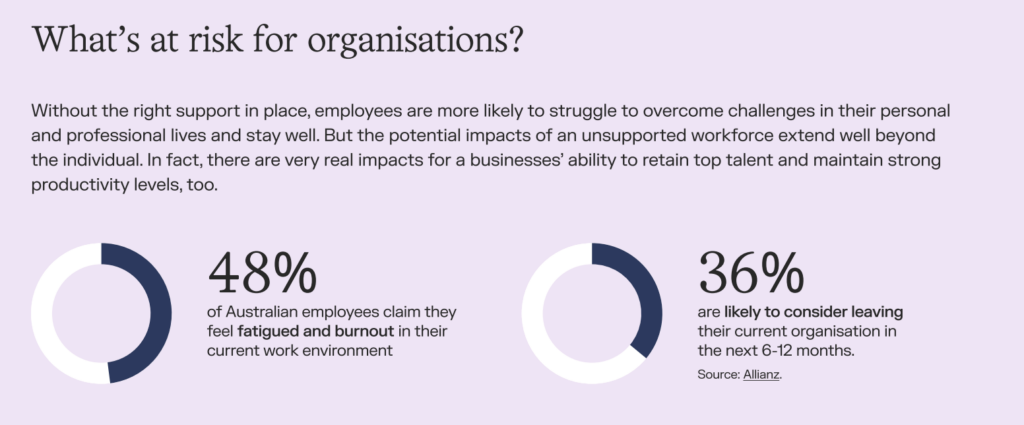
In high-workload environments, these conditions can make it harder to maintain the usual morale. Cramped spaces, limited airflow, or a lack of quiet areas to reset can leave people feeling depleted and on edge, contributing to burnout, increased sick leave, and, in some cases, resignation.
Here’s a breakdown of common key impacts
Impacts on individuals:
- Increased fatigue and physical discomfort
- Headaches, muscle strain, or ongoing pain
- Heightened stress and irritability
- Reduced concentration and decision-making ability
- A higher risk of employee burnout
Impacts on teams:
- Lower morale and engagement
- Increased presenteeism and absenteeism
- Frustration that affects team relationships
- Reduced psychological safety and openness
Impacts on the organisation:
- Declining productivity and quality of work
- Increased employee turnover and recruitment costs
- Higher workers’ compensation and health-related expenses
- Greater WHS and compliance risk
- Challenges in meeting psychosocial risk management obligations
How leaders can reduce the risks of a poor physical environment
Addressing this hazard doesn’t require perfection or an immediate overhaul. Meaningful progress often starts with awareness and considered actions.
The first step is being open to the possibility that parts of the workplace may not be supporting people as well as they could. Long-term familiarity with a space can create accidental blind spots as conditions become normalised.
It’s also important to recognise that employees experience poor environments in different ways. Notably, some team members may have a “toughen up” mindset, which can hide real impacts on their wellbeing and influence the broader team culture. Leaders need to look beyond appearances and consider how the space affects energy, focus, and engagement.
Start by observing and listening. Consider both the obvious issues — such as mould or faulty equipment that need urgent attention — and smaller, persistent problems, like a chair with no back support, that can quietly erode wellbeing and productivity over time.
In line with SWA, leaders can reduce risk by focusing on a few practical areas:
| Look at the workspace space/s with fresh eyes | Walk through workspaces or remote work setups and ask yourself whether the space truly supports safety, comfort, and focus. Safe Work Australia’s guidance on managing the work environment highlights that well-considered spaces are central to employee health and performance Managing the Work Environment and Facilities |
| Design or update workstations and layouts for safety and comfort | Ergonomic furniture, adjustable equipment, and functional layouts help prevent physical strain and fatigue. Safe Work Australia’s principles of good work design emphasise that workplaces should fit the tasks and the people doing them. Principles of Good Work Design |
| Manage environmental stressors | Noise, lighting, temperature, and air quality can erode wellbeing if risks are not managed. Simple adjustments like softer lighting, better ventilation, or quiet zones can make a real difference. For example, harsh lighting in an office can cause headaches or eye strain, while poorly ventilated warehouses can increase fatigue and discomfort. Safe Work Australia provides guidance on managing these factors, including noise and indoor air quality. Noise | Air Monitoring |
| Offer flexibility and adjustments where possible | Not everyone needs the same setup. Different tasks and bodies can require different setups. Consider sit-stand desks, private workspaces, or minor layout tweaks that can support employees to work more comfortably and productively, reducing strain. |
| Listen and act on feedback | Encourage team members to share what is and isn’t working. People are often the first to notice discomfort or inefficiencies in their environments. Regular check-ins, surveys, or informal conversations help surface issues early. How to consult with workers |
How to get another layer of support for you and your team
Even with the best observations and adjustments, leaders don’t have to tackle these challenges alone. Partnering with Sonder provides an extra layer of support for both employees and leaders.
With 24/7 access to qualified medical and mental health professionals, staff can get immediate advice and assistance for physical or psychological concerns, helping prevent issues from escalating.
Sonder also supports team leaders by offering guidance on identifying hazards, interpreting feedback, and implementing practical improvements.
Quite often employers forget that because an individual has ‘manager’ or ‘supervisor’ in their title, they don’t actually know how to manage or to deal with all situations. At Sonder we support the manager, ensuring they are able to still do their normal role, but more importantly, be there for that manager to lean on for support when they need it.

Head of Member Safety, Sonder
By embedding expert support into your workplace, you strengthen wellbeing, reduce burnout, and create a culture where employees can thrive, even in physical spaces that have historically been challenging.
Looking for added support? Speak to a Sonder team member today.