At a glance:
- A new legal shield: Effective 5 May 2026, the Commonwealth Workplace Protection Orders (CWPO) Act allows courts to ban aggressive individuals from government workplaces and stop them from contacting specific staff.
- Shifting the burden: Unlike previous personal protection orders, employers can now apply for these legal safeguards on behalf of their teams, removing the legal and emotional weight from the individual staff member.
- Rising frontline risks: The legislation responds to a surge in violence, with 75% of customer-facing employees experiencing aggression and over 1,500 serious incidents reported at services Australia in the last year alone.
- A national safety trend: While currently for commonwealth workers, this law signals a broader shift—mirrored by retail sectors in NSW and SA—toward stronger, employer-led legal protections for all frontline staff.
On 5 May 2026, a new law aimed at protecting frontline government workers will come into effect in Australia.
The Commonwealth Workplace Protection Orders Act 2025 introduces a new way to protect Commonwealth workers and workplaces from violence, aggression, and harassment from members of the public.
At its core, the change recognises something many frontline workers already know: dealing with aggression from customers or members of the public is becoming an increasingly common part of the job. And stronger protections are needed.
While the new law applies specifically to Commonwealth employees, its significance goes beyond government agencies. For senior leaders, HR teams, and safety professionals, it signals a broader shift in how Australia is thinking about customer aggression and frontline worker safety.
In this article, we’ll break down what these new protections mean, why they’re being introduced, and what they could signal for workplaces across the country.
This Bill is about making sure our frontline government workers who serve Australians every day can do their jobs without fear for their safety.
Minister for Government Services
Disclaimer: The information contained in this article and on this website is general information only and does not constitute legal advice. Although all efforts have been made to ensure the accuracy and currency of the information presented, Sonder takes no responsibility for any errors or omissions presented. Please contact a legal representative for individual advice.
A new legal safeguard for frontline workers
The new law allows courts to issue something called a Commonwealth Workplace Protection Order (CWPO). Put simply, it’s a legal order designed to help keep workers safe if someone has behaved aggressively toward them in the past.
If a member of the public has threatened, harassed, or acted violently toward a Commonwealth worker, a CWPO can place restrictions on that person to prevent further incidents.
For example, the order may stop them from:
- Entering a particular Commonwealth workplace
- Contacting a specific employee
- Engaging in behaviour that could threaten or intimidate staff
If someone breaks a Workplace Protection Order, it becomes a criminal offence, with penalties of up to two years in prison.
Importantly, the aim isn’t to block people from accessing essential government services. Instead, if someone is restricted from a particular location or worker, arrangements will be made so they can still access the services they need in a safer way.
Violence and aggression towards those workers will not be tolerated. All Australians, no matter where they work, have the right to a safe, secure and respectful workplace.

Then-Minister Attorney-General
Shifting the burden away from employees
One of the most important changes introduced by CWPOs is who is responsible for taking action when a worker is threatened.
In the past, if a worker experienced aggression or intimidation from a customer, they had to apply for a personal protection order (PPO) themselves. The victim would have to navigate legal processes at a time when they’re already dealing with the stress and impact of the incident. They shouldered the burden.
The new legislation shifts that responsibility.
Under the CWPO scheme, Commonwealth agencies can apply for protection orders on behalf of their staff. And the employer doesn’t need the worker’s consent to apply, though a worker can request it.
This means organisations such as Services Australia or the Australian Taxation Office can take the lead in seeking legal protection when a worker is threatened.
Importantly, these orders can protect individual employees or entire workplaces, recognising that aggression directed at one person can affect the safety and wellbeing of a whole team.
An authorised representative from a Commonwealth agency can apply for these orders through:
- The Federal Court of Australia
- The Federal Circuit and Family Court of Australia (Division 2)
- State and Territory courts
The aim is to make it easier for organisations to step in and act quickly when worker safety is at risk.
This legislation delivers on the Security Risk Management Review’s call for stronger protections, by putting real protections in place for all Commonwealth workers.
Minister for Government Services
Why a change in law is needed to protect Australian workers
For many frontline workers, customer or public aggression is not an isolated event. In fact, it’s an increasingly frequent part of the job.
75% of employees in customer-facing roles experience customer aggression, and 25% face it every week or more according to a survey of 2,007 Australian and New Zealand employees, commissioned by Sonder.
When it comes to commonwealth service workers specifically, they’re often supporting people during stressful or emotionally charged situations, such as:
- Helping someone navigate social services
- Dealing with tax issues
- Assisting communities during emergencies or natural disasters
These moments can create environments where frustration spills over into aggression. Several incidents in recent years highlight the seriousness of the risk.
In 2023, a Services Australia staff member was seriously injured after being stabbed at a service centre. In 2025, two Australian Border Force contractors were assaulted with a bladed weapon while carrying out their duties.
Beyond these high-profile cases, the numbers show how widespread the issue has become:
- Between July 2023 and June 2024, 1,692 serious incidents were recorded across Services Australia’s face-to-face service centres.
- In 2024–25, 1,510 serious incidents were reported through the same service channel.
But the reality is that many incidents never make headlines, and some go unreported entirely.
These figures suggest the incidents we hear about publicly represent only a fraction of the true scale of the problem.
Our frontline Commonwealth workers are doing important work supporting those in our communities who need it most.

Then-Minister
Part of a broader shift in Australian workplace safety
Although CWPOs apply specifically to Commonwealth workers, they reflect a broader shift in how Australia is thinking about workplace safety and customer aggression.
Data from Sonder’s Safety Gap Report 2025 shows just how widespread the issue has become across many industries.
- 65% of workers have experienced customer aggression
- A quarter experience it at least weekly
- 35% of those affected received no support at all
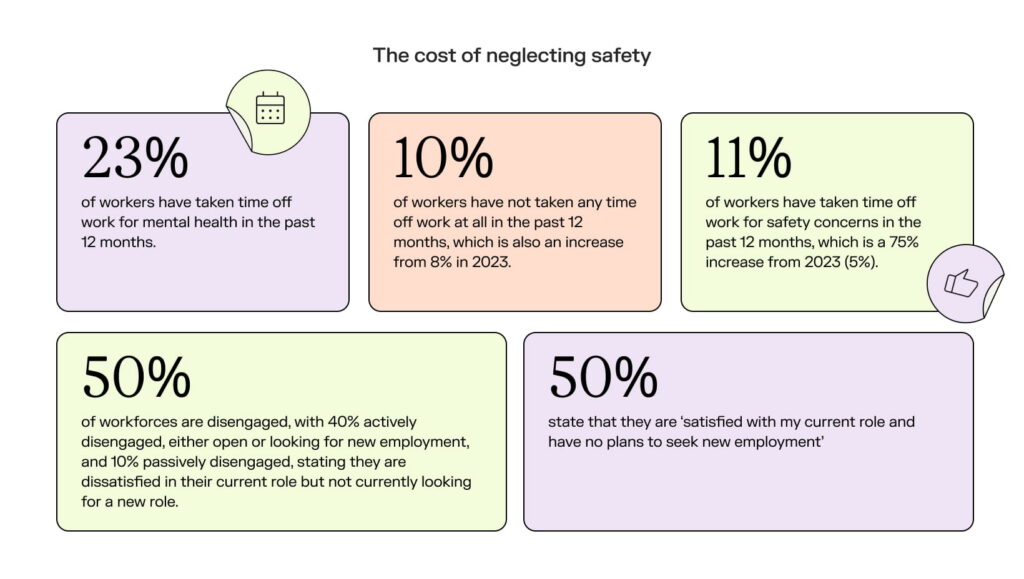
Perhaps most concerning, the number of employees taking leave due to safety concerns has more than doubled in a single year, rising from 5% to 11%.
These numbers are prompting organisations and governments to rethink how frontline workers are protected.
Retail is one industry exploring similar measures.
In New South Wales, the state government is developing a model for Workplace Protection Orders in retail, which would allow businesses to ban antisocial or violent customers from stores. The goal is to increase staff protection while reducing theft and violence. The retail sector has welcomed the idea.
Around 10% of offenders are responsible for roughly 60% of the harm experienced by retailers. Workplace Protection Orders are the key missing piece. They provide a clear legal mechanism to prevent known offenders from returning to stores where they’ve caused harm.

Australian Retailers Council CEO
South Australia has also introduced legislation exploring similar protections, based on earlier models implemented in the ACT.
Taken together, these developments suggest CWPOs could be the start of a wider national shift toward stronger protections for frontline workers.
Legal protections are only part of the solution
A court order may tell someone to stay away from a workplace, but the emotional and psychological impact of aggression can last long after the incident itself.
Laws like CWPOs are an important step in protecting workers. They set clear boundaries and create consequences for those people who threaten or harm staff. However, CWPOs usually come into play after an incident has already occurred.
For organisations focused on employee safety and wellbeing, the challenge is broader. It’s about preventing incidents where possible and supporting employees before, during, and after they happen.
This is where a more proactive approach to safety becomes essential. At Sonder, the focus is on supporting workers across the entire safety journey:
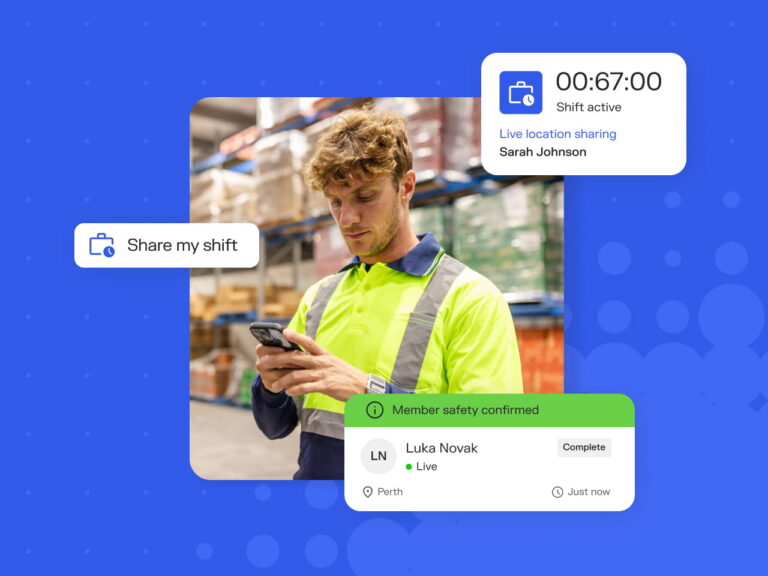
- Prevention: Tools like ‘Check on Me’ help employees stay connected and feel supported, particularly if they’re working alone or in higher-risk environments.
- Immediate response: 24/7 access to trained responders means employees can receive guidance and support in real time if they feel unsafe.
- Post-incident care: Access to mental health support helps employees process what has happened and recover after difficult or traumatic experiences.
Because for many organisations, the most immediate questions are:
- Who is supporting your employee after a frightening encounter with a customer?
- Who is there when they feel uneasy about returning to work?
For a deeper dive into the issue, watch our panel from Sonder summit where leaders from Hoyts, Woolworths and BOQ Group share their experiences, and how they’re striving to create safe, supportive, and high-performing workplaces.
Commonwealth Workplace Protection Orders are an important step forward in protecting frontline workers. But complementing these legal protections with proactive safety and wellbeing support — like the real-time assistance provided through Sonder — helps ensure employees are supported long before, during, and after an incident.
To hear more about how Sonder could help protect your workforce, book a demo.