Your organisation at a glance
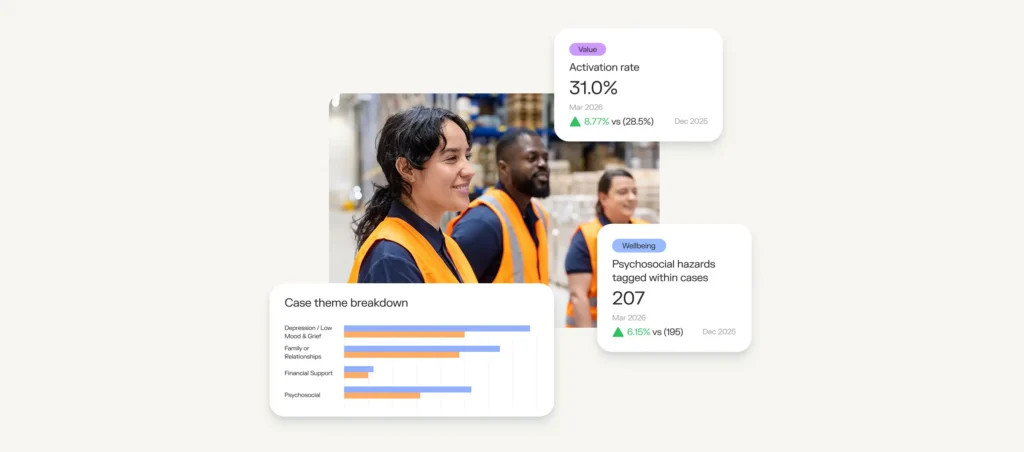
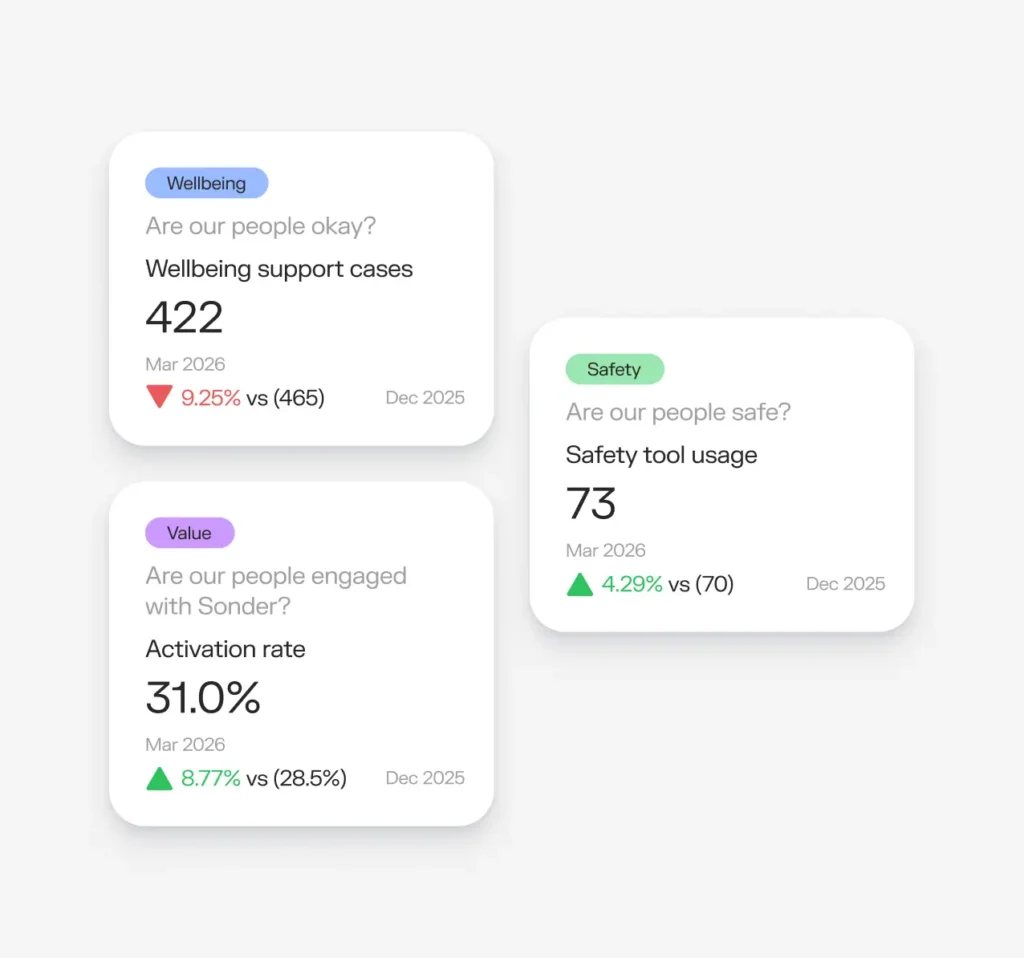
The reporting overview provides a clear view of your organisation across three core outcomes:
-
Are our people okay?
-
Are our people safe?
-
Are our people engaged with Sonder?
Headline indicators and trend views highlight changes to the health and safety of your people over time, so you know where to focus future time and investment.
Understand pressure, distress and support themes
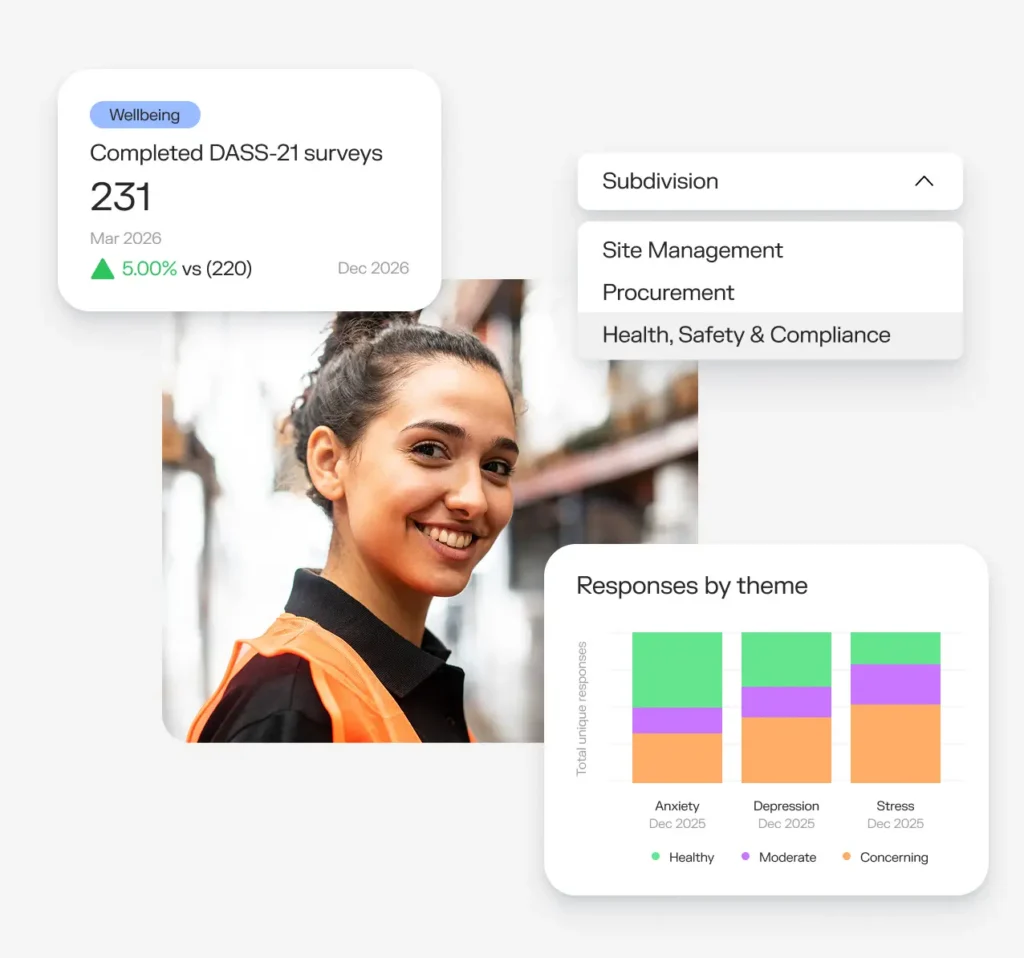
Sonder reporting allows you to track the mental, social and physical wellbeing of your people and establish patterns with:
-
Results from wellbeing assessments
-
DASS-21 screening indicators for depression, anxiety and stress
-
Mental health support priorities
-
Comparisons to industry benchmarks and trends over time
Filter by division to see how experiences differ across teams.
Identify hazards surfaced through support interactions
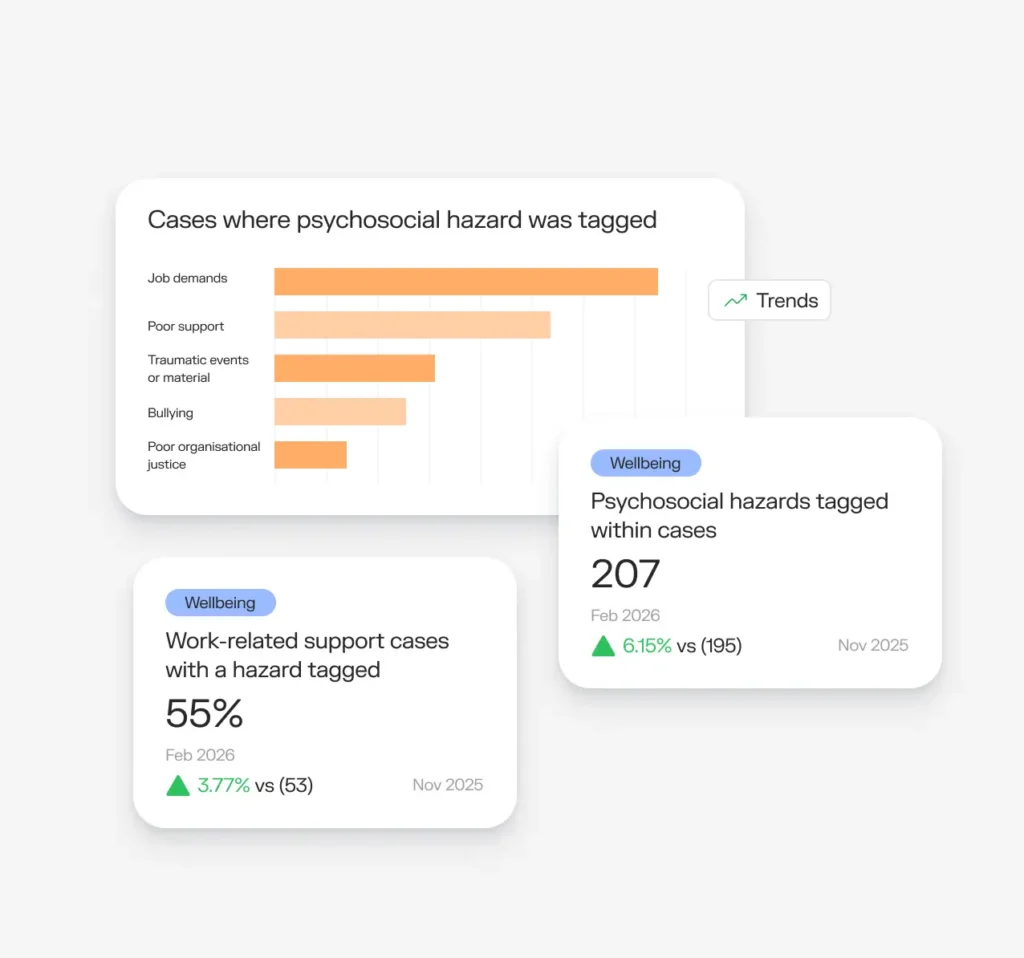
Aggregated themes identified through Sonder support interactions help you understand:
-
Which psychosocial hazards are emerging
-
Where they are more prominent
-
How trends are changing over time
These insights help inform prevention efforts, education and formal psychosocial risk assessment.
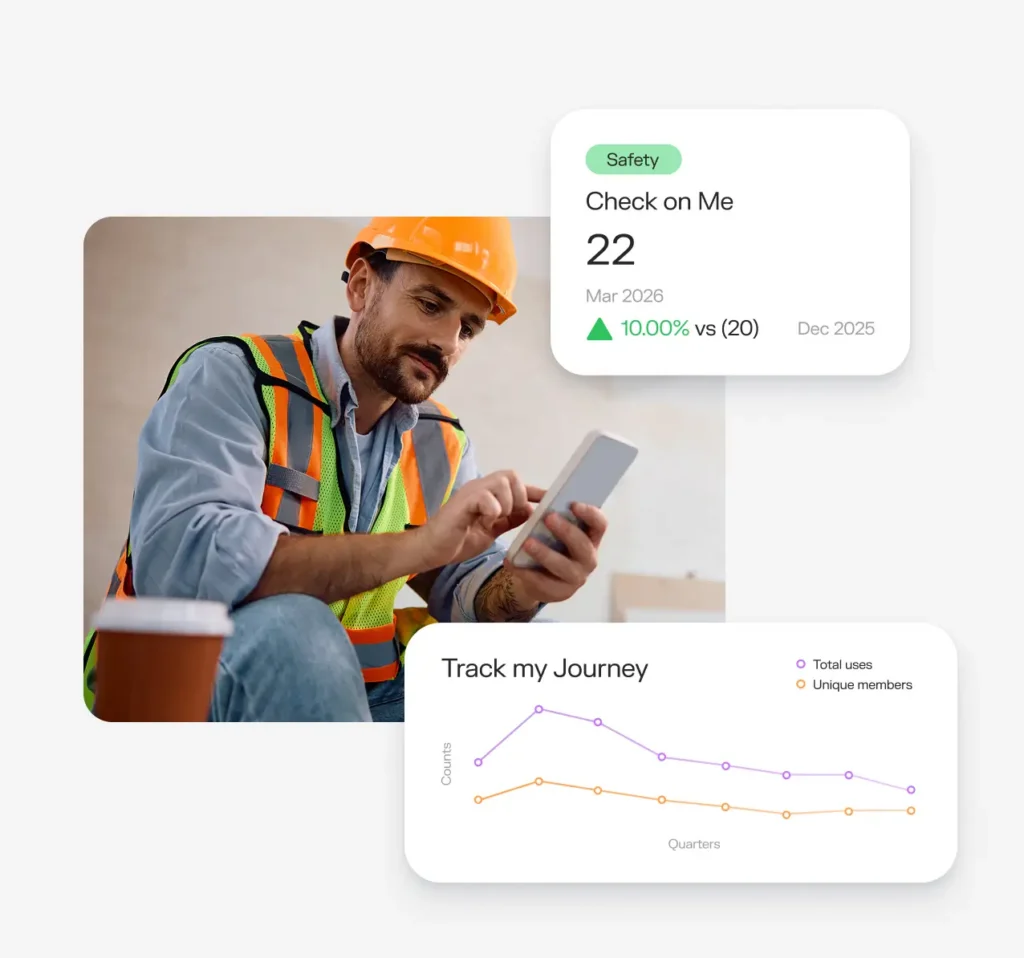
Understand how people are using safety support
See how people are engaging with proactive safety features available through Sonder, including:
-
Check on Me
-
Share My Journey
-
Team Safe
Get visibility into awareness, adoption and usage
See how support is making a difference
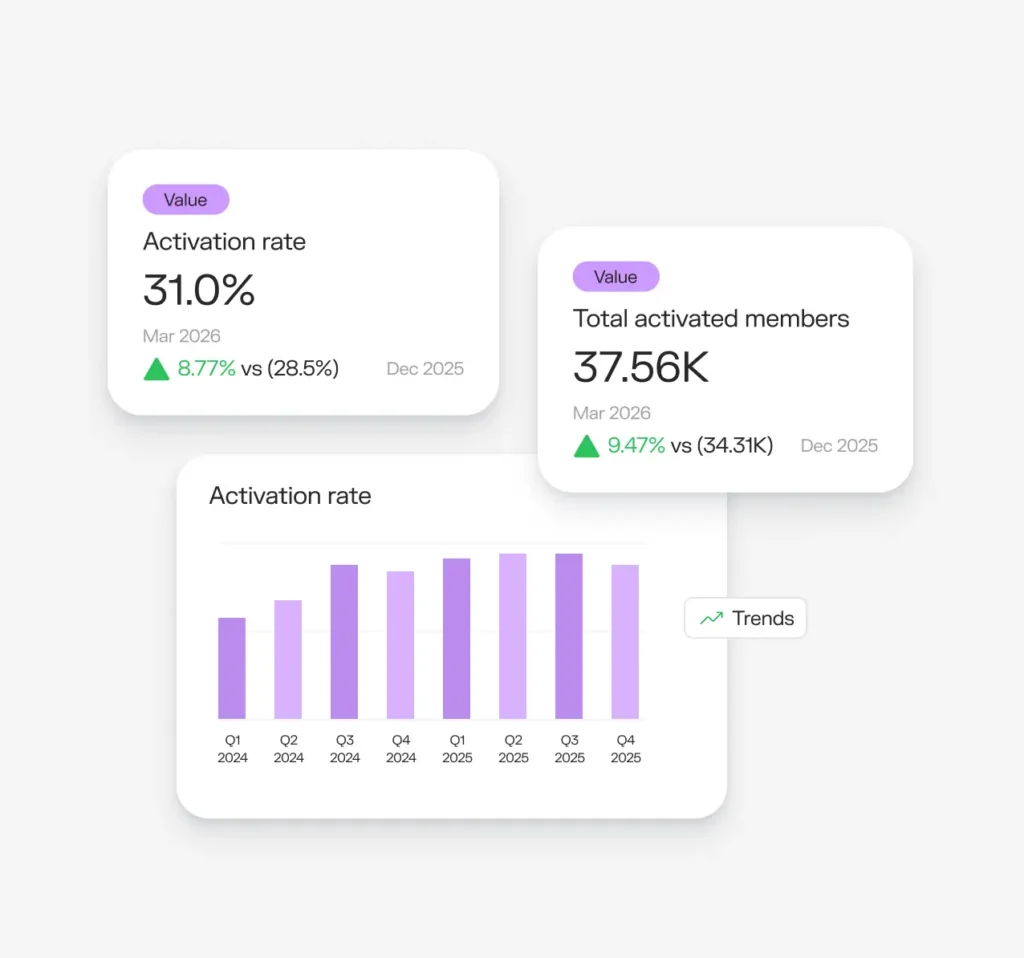
Understand how your people are engaging with health and safety support and how it’s perceived through:
-
Eligibility, activation and utilisation trends
-
Member satisfaction following support interactions
-
Engagement with self-help, educational and preventative content
-
Directional indicators of value based on reported outcomes
Viewed together, these indicators provide context around adoption, reach and perceived impact over time.
“The Sonder data and reporting system is really important to us as it gives us unique intelligence and insights into the wellbeing of our workforce and their unique needs.”
Founder and CEO, AeroPM
More reasons to choose Sonder
Holistic care
Comprehensive support for personal safety, mental and medical health.24/7 access
Round-the-clock assistance anytime, anywhere, when it’s needed most.Instant response
Expert support delivered in an average of just 10 seconds.High utilisation
An industry-leading 40% engagement rate drives real impact.Proactive support
Prevention-focused care that addresses issues before they escalate.Trusted accreditation
Quality care backed by ACHS certification for peace of mind.

Designed for responsible interpretation
Sonder is committed to protecting member privacy and confidentiality. All reporting in the Sonder Portal is:
-
Aggregated and de-identified
-
Protected by minimum thresholds to preserve anonymity
-
Designed to highlight patterns and hazard indicators, not assess individuals
-
Supported through governance controls such as role-based access
Insights should always be interpreted alongside organisational context and professional judgement.