At a glance:
- The gap between struggling and seeking support: While 77% of employees report symptoms of poor mental health, 78% do not identify as having a condition, leading to the normalisation of burnout and stress as just a part of everyday life.
- A pervasive energy crisis: Fatigue is now a constant backdrop to work, with 94% of people reporting low energy and 73% experiencing physical symptoms that directly impacted their ability to perform over the past year.
- The business case for belonging: Connection remains a critical driver of retention and performance; 83% of workers perform better when they feel they belong, while 62% would consider leaving a role if they didn’t.
- Barriers to care and the trust gap: Despite high awareness of support services like EAPs (75%), only 17% use them due to concerns around privacy, cost, and a lack of trust in the “transactional” nature of traditional programs.
As a leader, you’ll be acutely aware that your team is facing wellbeing challenges outside of their 9-to-5. Whether it’s navigating rising cost-of-living pressures and stretched healthcare systems, juggling caring responsibilities, or simply operating in an always-on, digital environment that makes it harder to switch off.
For many leaders, this creates a conflict. They’re expected to support their teams while still meeting targets, often without full visibility of what individuals are managing behind the scenes.
Sonder’s 2026 State of Employee Health and Wellbeing Report was created to bring clarity to that complexity. Drawing on insights from thousands of employees across Australia, New Zealand, and the UK, it offers a grounded, evidence-based view of how people are really experiencing work in 2026.
Dive into the full report here or keep reading for an overview of the key trends.
Mental health and the normalisation of support
The first set of findings highlights that, while many employees are struggling with their mental health, they don’t realise it.
While 77% of employees reported symptoms associated with poor mental health, 78% do not identify as having a mental health condition.
In practice, this often looks like ongoing stress, anxiety, low mood, or employee burnout being absorbed into everyday life. When it’s framed as “just work.” “Just a busy season.” “Just life.” then for many, it doesn’t feel serious enough to seek formal support.
Across Australia, New Zealand, and the UK in the past 12 months, Sonder’s research has found:
- Nearly half experienced stress
- Two in five experienced anxiety
- One in five experienced depression
- Almost one in five experienced burnout
- Yet only 13% sought professional mental health support
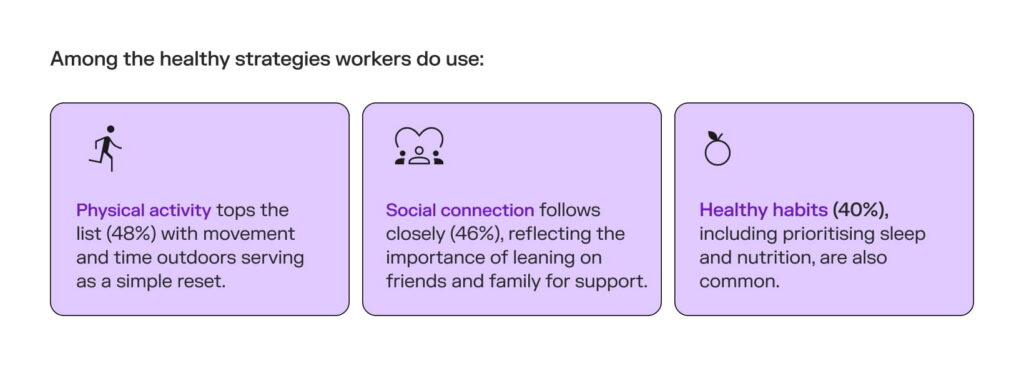
Many employees are doing their best to cope through exercise or social connection. These strategies can help, but the data reveals a clear gap between what people are carrying and the support they access.
For leaders, this is an important context. When struggling is minimised or normalised, and support feels reserved for crisis, it becomes far less likely that people will seek support.
Workplace mental health is both a people priority and a business investment. For every $1 invested, organisations see an average return of $2.30 through improved productivity, reduced absenteeism, and lower turnover.
Physical fatigue spanning far and wide
Another major finding is that low energy has become a backdrop to daily work life.
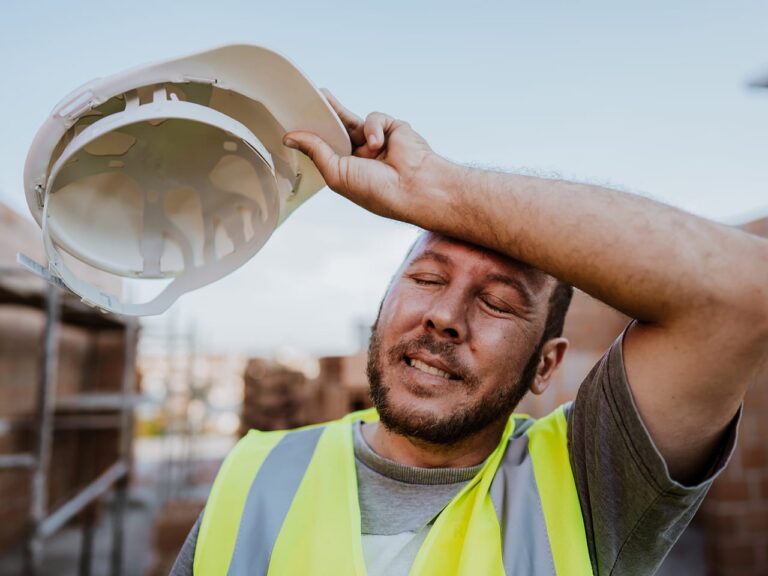
Across ANZUK, 94% of people reported feeling fatigued or lacking energy over the past 12 months. And 73% experienced physical symptoms that impacted their ability to work at some point during the year.
Fatigue is a normal part of being human. Energy rises and falls across seasons of life. But when work consistently draws more than people can reasonably replenish, strain accumulates.
Physically demanding work and irregular hours can intensify strain, but energy levels are shaped by more than work alone. Caring responsibilities, long commutes, chronic conditions, and major life transitions all draw from the same limited reserve.
When energy runs low for too long, the impact is practical and measurable. Think more errors, greater injury risk, slower recovery from setbacks, and gradual disengagement.
Performance rarely collapses overnight — it gradually wears down when people are expected to operate at full capacity all the time. Energy fluctuates across weeks, roles, and life stages. Leaders who design work with that reality in mind build steadier, more sustainable performance.
In practice, that means creating conditions that protect recovery and sustain capacity through:
- Reasonable workloads aligned to capacity
- Thoughtful scheduling
- Flexibility where possible
- Early, accessible support pathways
Belonging builds stronger teams and organisations
More than a decade of research shows that belonging is a core psychological need. And one that significantly shapes how people step into their roles and engage at work.
The Health & Safety Executive and CIPD wellbeing frameworks highlight belonging, employee voice, and inclusion as critical drivers of engagement, performance, and legal compliance.
When employees feel connected to a team, share in a common purpose, and are part of a broader community, they show up more engaged in their work and resilient in the face of change.
Across ANZUK, younger generations are often leading the way in prioritising belonging — but the need itself spans every age and stage. It cannot be assumed.
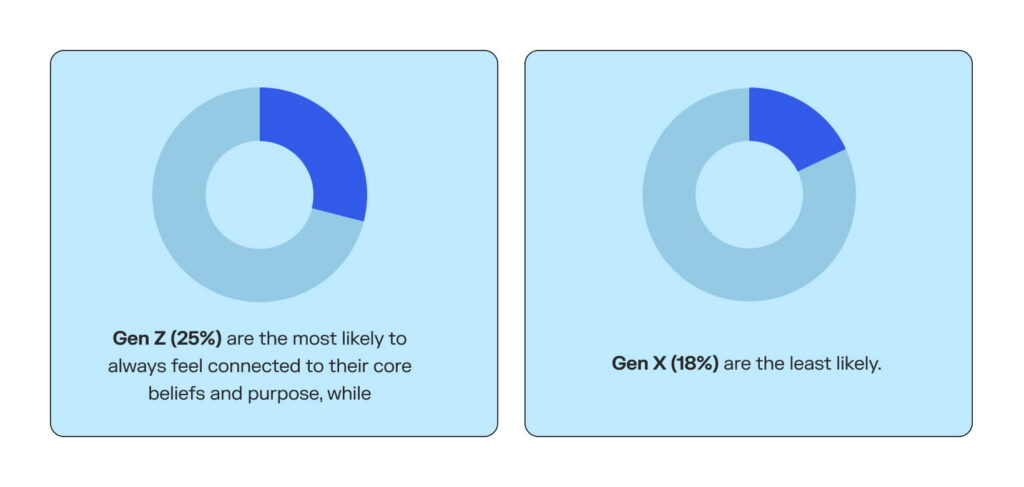
For leaders, fostering belonging rarely requires sweeping culture overhauls. More often, it’s built through small, consistent behaviours:
- Psychological safety in meetings
- Timely, genuine recognition
- Managers who check in beyond task lists
- Clear, steady communication during change
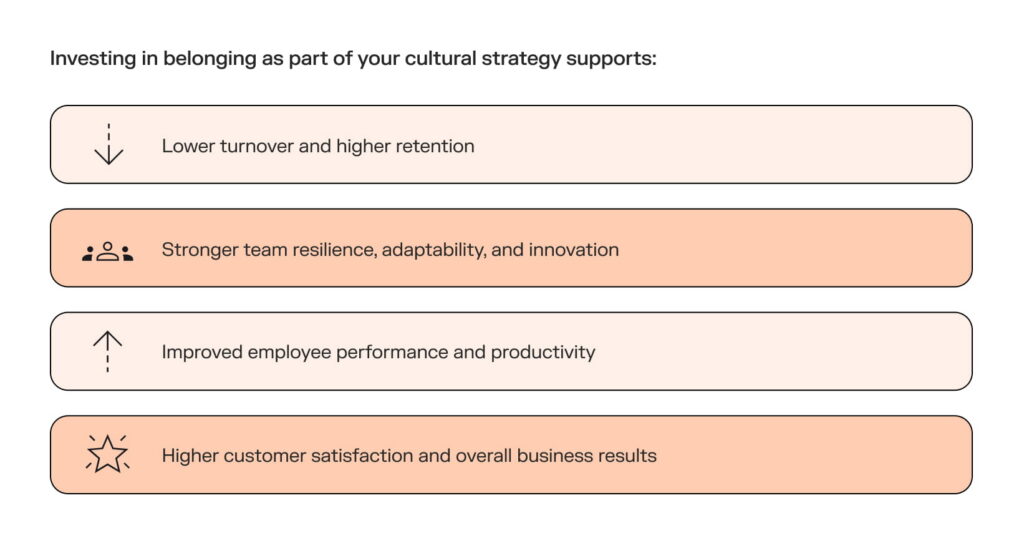
Belonging grows in everyday moments, and those moments shape whether people choose to stay, contribute, and thrive.
Barriers to care and the power of flexibility
Another insight from the report is how often employees delay seeking support, and the subtle ways workplaces can influence that choice.
Across ANZUK, 1 in 3 employees put off medical care in the past year, with 42% saying their symptoms “weren’t serious enough.”
Other common barriers include long wait times, busy schedules, cost, anxiety about diagnosis, and distrust in healthcare systems.
“Such difficulties getting a GP appointment.” UK survey respondent
Leaders can’t solve systemic healthcare challenges, but small workplace actions can make a real difference:
- Encouraging flexibility for appointments without stigma
- Normalising early help-seeking in team conversations
- Providing confidential, easy-to-use support pathways
It’s in these everyday moments that employees decide whether to seek help early or wait until things snowball.
True flexibility isn’t just about work hours, it’s about being able to access support whenever and wherever it is needed. It’s incredible that we’ve been able to scale a model offering round-the-clock support, from nurses to counsellors, so people can be at their best without having those between work and health.

Chief People Officer, Sonder
High EAP awareness but low uptake and trust
Most organisations now offer wellbeing resources, including Employee Assistance Programs (EAPs). On the surface, awareness appears strong, but awareness doesn’t automatically translate to usage.
Across ANZUK, 75% of employees say they know workplace support services exist. Yet only 17% reported using them in the past 12 months.
When asked why they hadn’t accessed support, employees shared that they:
- Didn’t feel they needed it
- Felt uncomfortable asking
- Worried about privacy
- Questioned whether it would genuinely help
As one UK respondent shared: “It feels like corporate cover rather than genuine support.”
These responses point to a trust and credibility gap. Offering support is one step; embedding it into culture is another.
Employees are more likely to engage with services that feel:
- Clearly confidential — and communicated as such
- Flexible around schedules
- Easy to access
- Human rather than transactional
- Comprehensive, not limited to a few sessions
When support feels safe, credible, and normalised, uptake shifts naturally. Early, accessible intervention — available to everyone, including leaders — strengthens both individual wellbeing at work and organisational resilience.
Looking forward with greater context and tools
Digital acceleration, economic uncertainty, and shifting expectations around flexibility, autonomy, and purpose are reshaping work.
The 2026 State of Employee Health and Wellbeing Report provides a clear picture of today’s landscape:
- Mental strain is common — and often normalised into inaction
- Physical health challenges are influencing performance and safety
- Belonging drives engagement and retention
- Barriers to care include cost, delay, and distrust
- Awareness of support does not guarantee engagement
Together, these insights reinforce what many leaders are seeing: wellbeing cannot sit at the edges of strategy. It needs to be woven into how work happens, not treated as a stand‑alone program.
The future model of workplace support provides a roadmap for early, seamless intervention that meets employees where they are — reducing barriers, building trust, and creating meaningful impact without overloading managers.
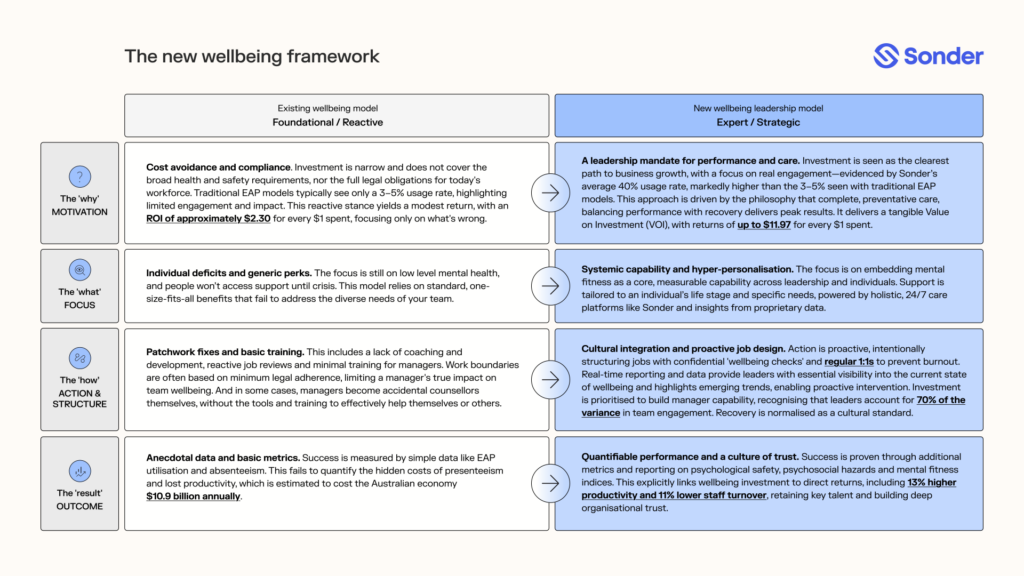
Download a copy of the wellbeing framework here.
Sonder supports this approach with 24/7 access to holistic mental and physical health support, helping organisations move from awareness to action. Together, these insights and tools give leaders a clear path to foster resilience, engagement, and thriving teams as we head into 2026 and beyond.
Dive into the full report now for more insights and guidance: The 2026 State of Employee Health and Wellbeing Report.