Those early in their careers are hit hardest
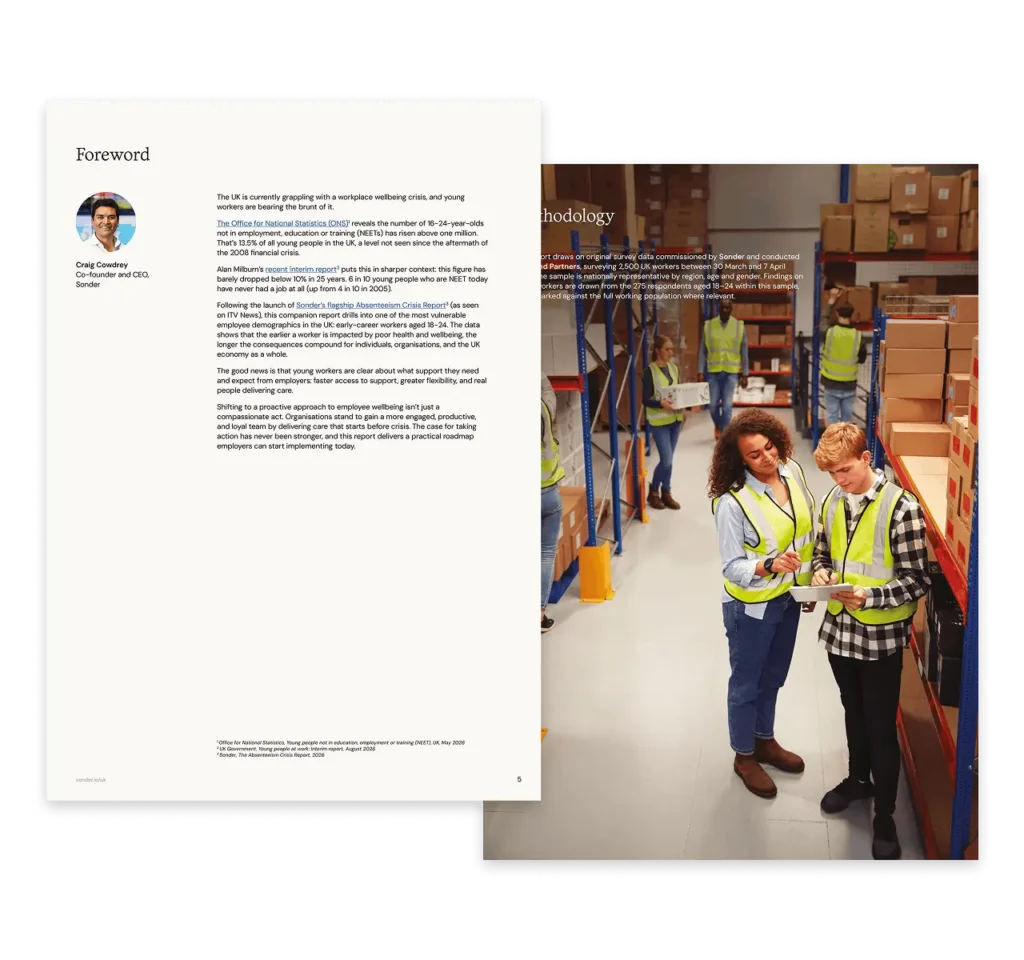
More than one million 16–24 year olds in the UK are now not in employment, education or training, a level not seen since the 2008 financial crisis. This companion to Sonder’s Absenteeism Crisis Report focuses on early-career workers aged 18–24. The data shows that the earlier poor health and wellbeing takes hold, the longer the consequences compound for individuals, organisations and the UK economy.
The good news is that young workers are clear about what they need: faster access to support, greater flexibility, and real people delivering care.
Clinical insight from the people delivering care
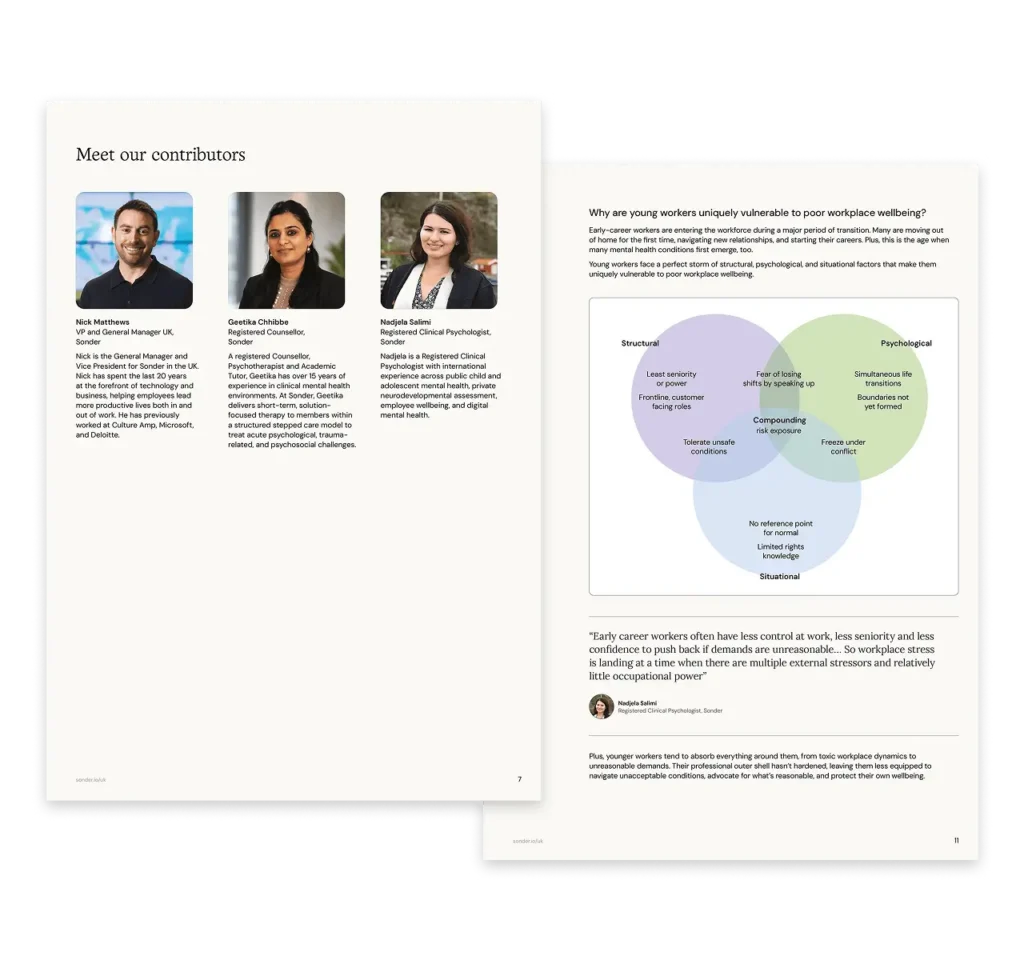
Sonder’s Registered Clinical Psychologist Nadjela Salimi and Registered Counsellor Geetika Chhibber explain why young workers are uniquely vulnerable. This includes less seniority, less occupational power and boundaries that haven’t yet formed, all landing during one of life’s biggest periods of transition. Alongside them, Nick Matthews, VP and General Manager of Sonder UK, sets out what employers need to change, and why the timing of support matters most.
The workforce wellbeing statistics employers can’t ignore
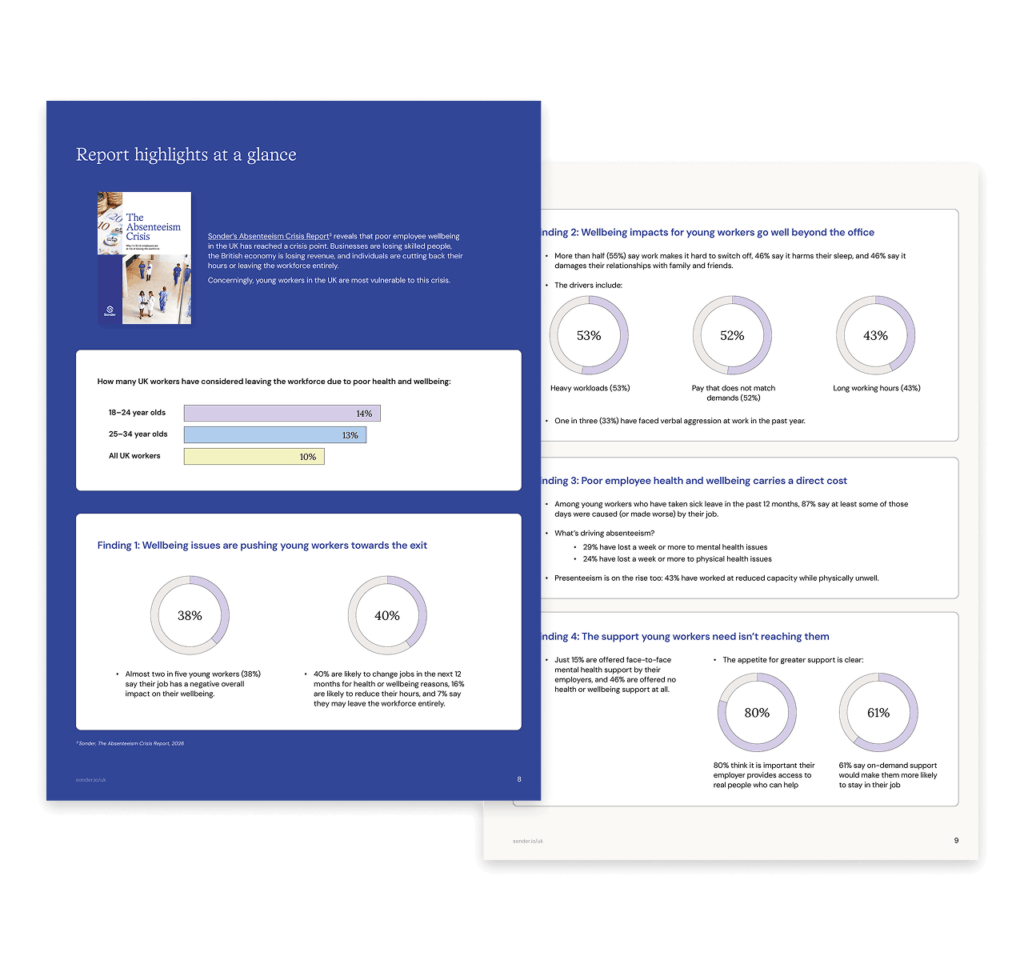
Based on a nationally representative survey of 2,500 UK workers conducted by Strand Partners, the findings show how wide the support gap has become for young workers:
- 38% say their job has a negative impact on their wellbeing
- 43% report feeling burnt out, 7 points above the national average
- 52% have considered changing jobs in the past year due to poor health or wellbeing
- 46% are offered no health or wellbeing support by their employer
- 62% believe better or faster employer support could have helped them avoid sick days
A practical roadmap for proactive support
This report goes beyond the headline numbers to show employers where to act, including:
- The wellbeing picture for young UK workers, and why they’re uniquely vulnerable
- The top drivers of work-induced stress, from heavy workloads to pay that doesn’t match demands
- The safety risks facing young people in frontline, customer-facing roles
- The real cost of absence and presenteeism to teams and employers
- The four factors behind the support gap, and what stops young workers speaking up
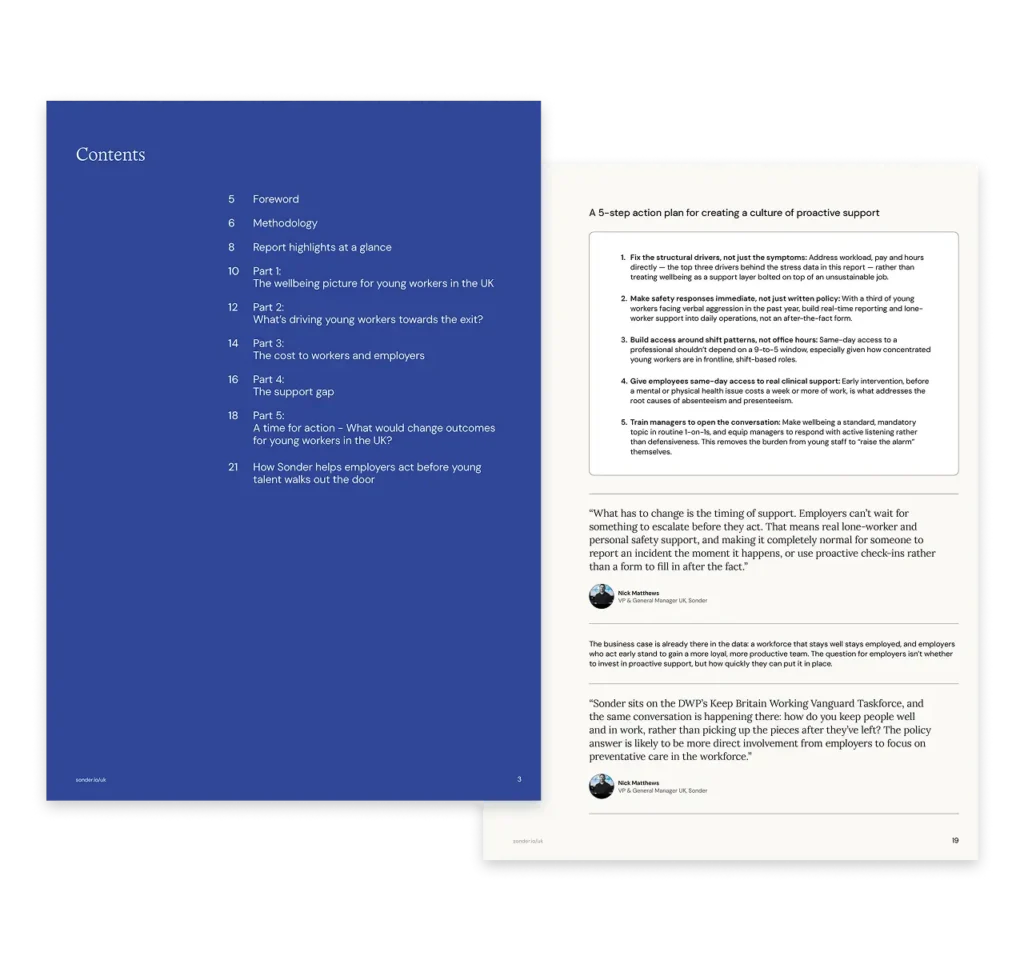
- A five-step action plan for building a culture of proactive support

Who is this report for?
Whether you employ a handful of apprentices or thousands of frontline staff, this report gives you the data and actions to keep young talent well and in work.
- HR directors and people & culture teams
- Wellbeing and absence management leads
- Health, safety and risk professionals
- Operations leaders in retail, hospitality, healthcare and other frontline sectors
- Line managers and team leaders
If young people are part of your workforce, this report is for you.
“Most employee support models only switch on once something has already gone wrong, once someone’s off sick, or has already handed in their notice. For young talent, that’s too late.”

VP and General Manager UK, Sonder