A practical guide to comparing EAPs and EAP alternatives
EAPs have long been the default choice for employee support, but uptake is often low. Average EAP usage is estimated at around 5% of covered employees in Australia and 3% in the UK. Meanwhile, employees now expect support that goes beyond counselling, including medical and safety care. This guide explains what a traditional EAP offers, why uptake stays low and what EAP alternatives do differently, so you can compare like with like.
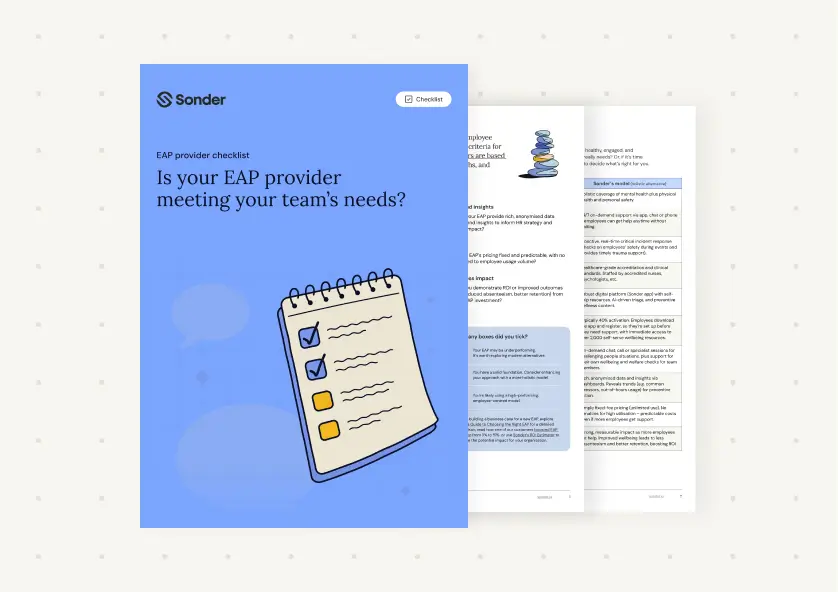
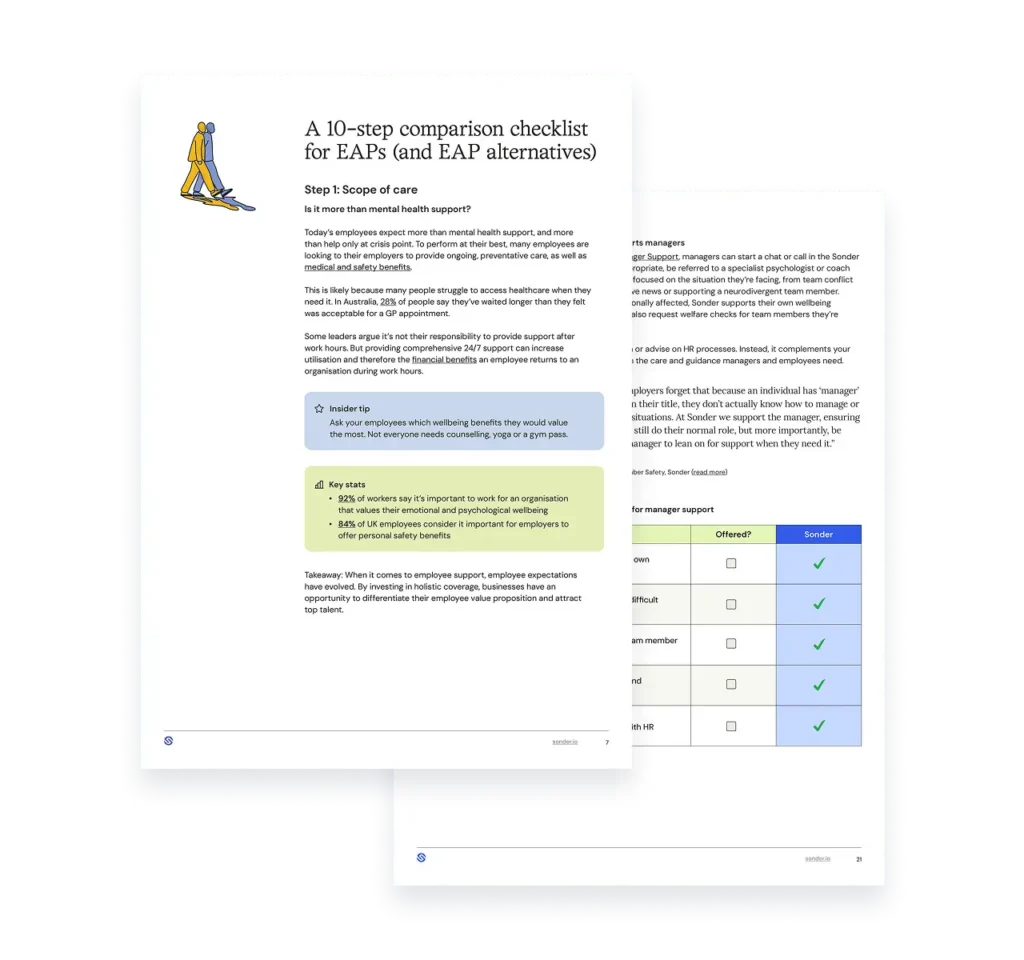
Compare any provider with a 10-step checklist
Use ten questions to test any provider, including the one you have now. Each step comes with insider tips, key stats and example comparison tables, covering scope of care, hours of care, critical incident support, accreditations and qualifications, digital self-help, employee uptake, manager support, data and insights, pricing and business impact.
Switch providers without gaps in support
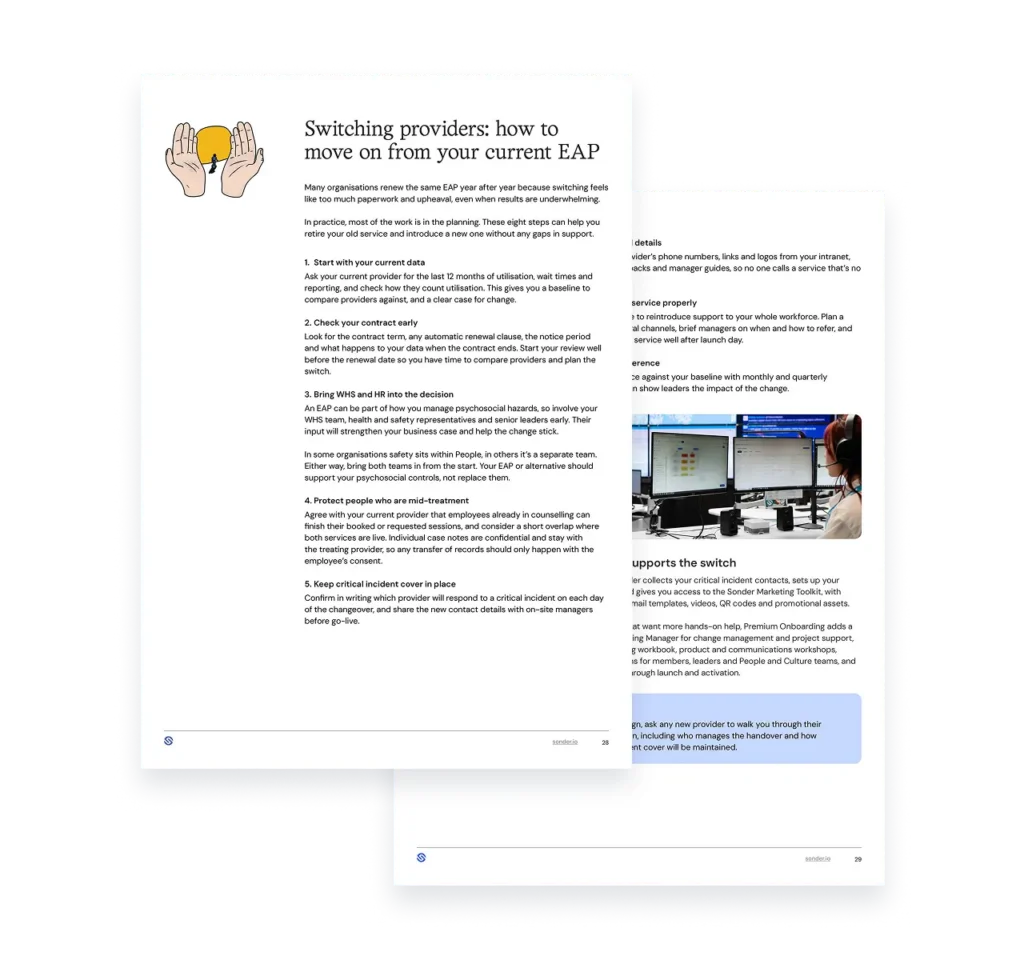
Switching can feel like a lot of disruption, so many organisations simply renew. In practice, most of the work is in the planning. The guide’s eight-step switching plan covers checking your contract early, bringing WHS and HR into the decision, protecting employees who are mid-treatment, keeping critical incident cover in place and launching the new service properly.
Learn from organisations that made the switch
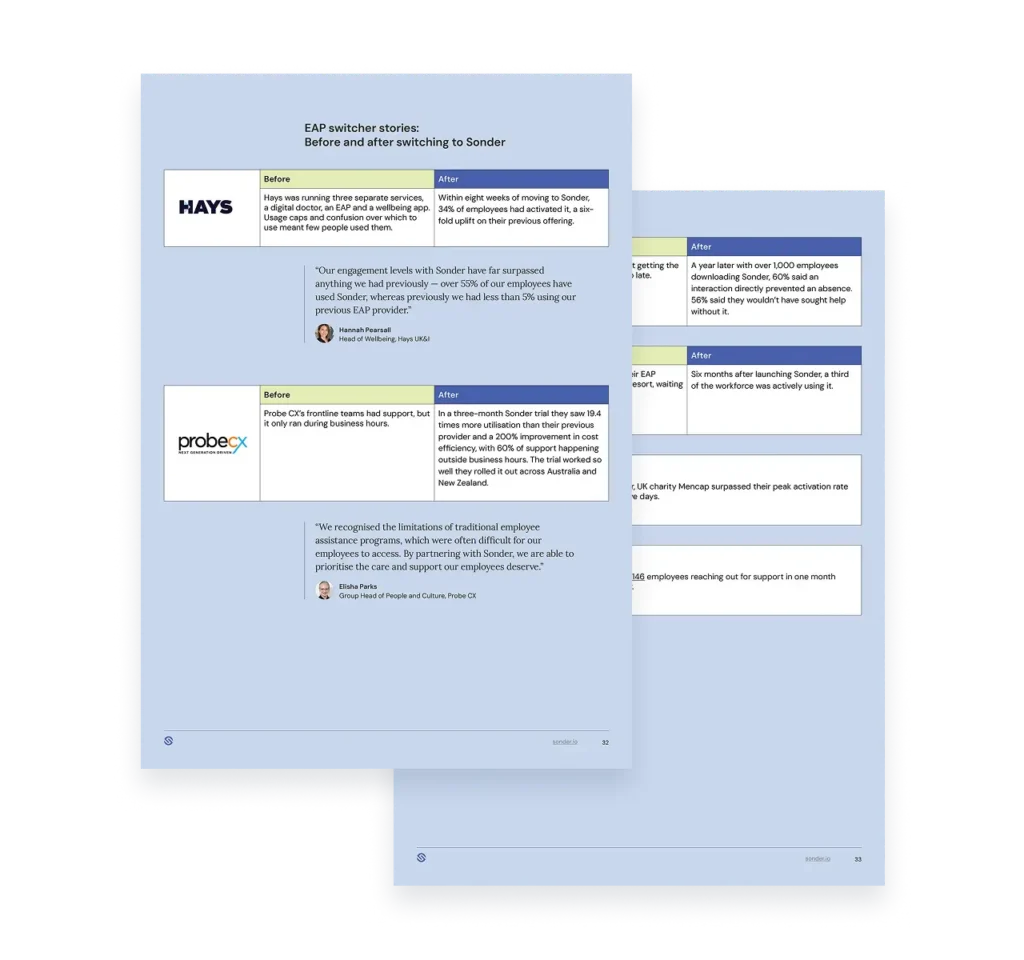
Read how Hays UK&I, Probe CX, Schools UK, Bethesda Health Care, Mencap and Best&Less moved on from their previous support. Within eight weeks of moving to Sonder, 34% of Hays UK&I employees had activated it, a six-fold uplift on their previous offering. Best&Less went from three to 146 employees reaching out for support in one month.
What's inside the guide
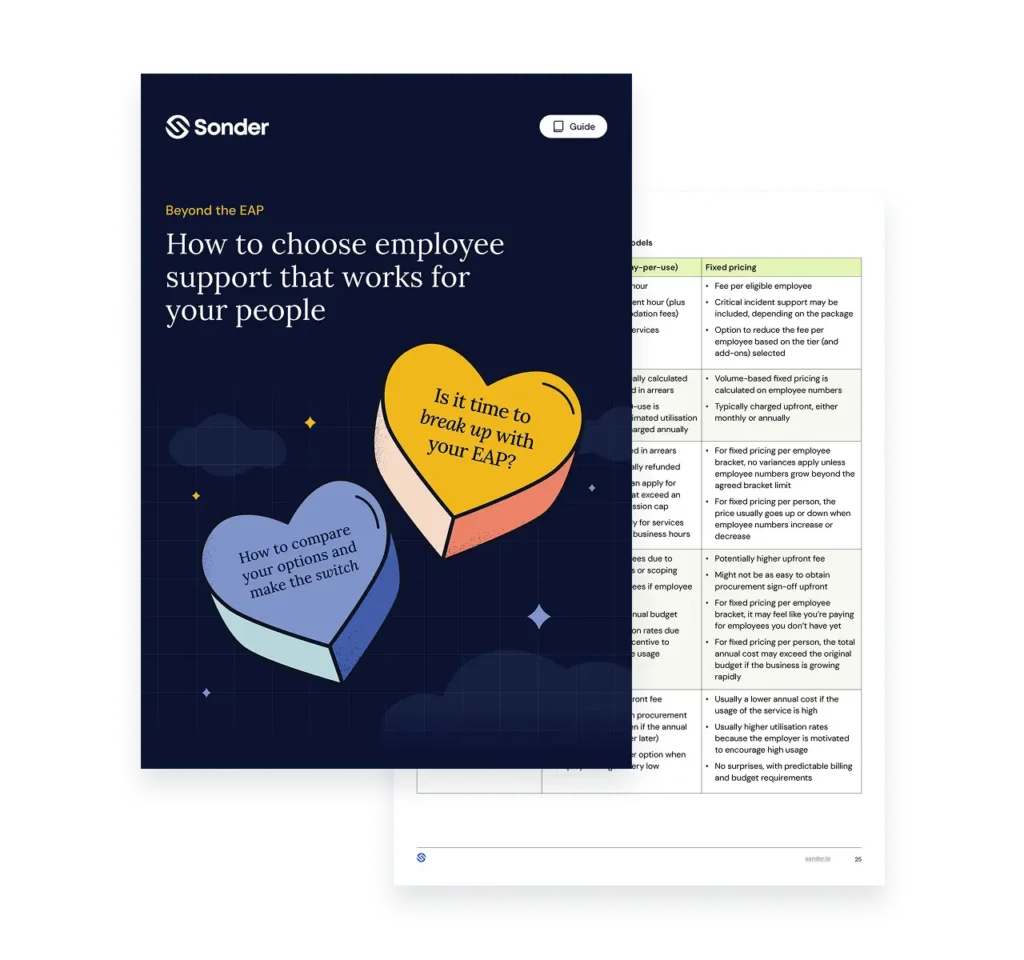
This guide gives you everything you need to review your current EAP and compare your options, including:
- What an EAP is, and three reasons employee uptake stays low
- What makes an EAP alternative different
- A 10-step checklist for comparing providers, with example tables
- How to measure activation, utilisation and outcomes
- Pricing models compared, plus a four-step process to avoid budget surprises
- An eight-step plan for switching from your current provider
- Expert insight from Kimi Powell, Brett Ward and Dave Vidler
Who is this guide for?
Whether you’re reviewing your EAP ahead of renewal or choosing employee support for the first time, this guide helps you make a confident, evidence-based decision.
- HR and people and culture teams
- WHS and safety professionals
- Finance and procurement leaders
- Founders, directors and executives
If your EAP renewal is coming up, this guide is for you.

“Our partnership with Sonder goes beyond what a traditional EAP could offer. Whether it’s medical care, mental health support, safety or everyday wellbeing, our people can access help in one app, at any time of day. With 62% utilisation, more of our staff are feeling supported, and we’re proud to see it.”

People and Culture Business Partner, Gowrie NSW
Frequently asked questions about comparing EAPs
What is an EAP?
An employee assistance program (EAP) is typically an employer-funded, mental health-focused program that offers confidential counselling to employees and their immediate family members. This counselling is often free, short-term and focused on personal or work-related problems.
What is an EAP alternative?
An EAP alternative offers the support you’d expect from an EAP and adds medical and safety support. Sonder, for example, is a people risk intelligence and prevention platform that brings mental health, medical and safety support together, so organisations can act earlier rather than only after harm has occurred.
What is a good EAP utilisation rate?
EAP providers average around a 5% utilisation rate. Sonder typically sees around 40% activation, though activation (signing up) and utilisation (using support) aren’t the same measure. Utilisation rates can also vary by work role and industry, so ask providers how they define and count each one.
How do I compare EAP providers?
Compare providers on ten areas: scope of care, hours of care, critical incident support, accreditations and qualifications, digital self-help, employee uptake, manager support, data and insights, pricing and business impact. Ask your current provider for the last 12 months of utilisation data, so you have a baseline to compare against.
Is it difficult to switch EAP providers?
It doesn’t have to be. Most of the work is in the planning: checking your contract’s notice period and renewal date, making sure employees mid-treatment can finish their sessions, keeping critical incident cover in place and relaunching the new service so people know how to use it. A good provider will manage much of this with you.
Is Sonder an EAP?
Yes, and more. Sonder provides everything you’d expect from a traditional EAP, including confidential counselling, critical incident support and manager advice, and adds 24/7 nurse-led medical triage and personal safety support, so employees have one place to go for any health, safety or wellbeing need. It’s 100% confidential and accredited by the Australian Council on Healthcare Standards (ACHS), held to the same standards as hospitals.