At a glance:
- Most teams are missing at least one of the three ingredients that separate high performance from burnout: trust, clarity, and expectations
- In a Sonder masterclass, Shelly Johnson shared tips for building a high-performing team, without the hustle culture that can lead to burnout
- She shared that small leadership habits like a 15-minute check-in, asking the right questions, and understanding what drives each person can make the biggest difference
The best people don’t leave a business overnight. They quietly disengage, doing the bare minimum, dodging the hard conversations and counting down to Friday.
It’s a pattern playing out across workplaces in the UK right now, as average tenure drops, burnout climbs, and leaders scramble to understand why their high-performing culture isn’t performing the way it used to.
Sonder’s recent State of Employee Health and Wellbeing Report 2026 reveals how fatigue, burnout, hustle culture and distress are normalised:
- 77% of employees experienced symptoms of poor mental health in the past 12 months, yet the vast majority (78%) don’t identify as having a mental health condition.
- Plus, over 9 in 10 (94%) of employees reported feeling fatigued or lacking energy in the past 12 months.
High performance is possible without burning your team out in the process. But it does require the right support to ensure leaders are empowering people to do their best work, in a sustainable way.
To help managers build a high performing team without the hustle, Shelley Johnson from Boldside joined us for a webinar to share her top tips on how to create a culture that drives real, sustainable results. Watch the full recording here, or catch up on the highlights below.
Watch the full masterclass: How to build a high-performing culture without the hustle
Meet the expert: Shelley Johnson
Founder of Boldside, HR leader, author, and speaker. Columnist for The Age and Sydney Morning Herald. Host of the award-nominated podcast This Is Work. Shelley has spent over a decade coaching executives and leading HR teams across Australia.
Hustle vs. hard work: Why they’re not the same thing
It’s easy to confuse hard work with hustle. Both look busy from the outside: late nights, full calendars, and a team that’s always on. But there are important differences that distinguish meaningful, focused output from unmanageable ways of working.
“Hustle is short-lived. Hard work is sustainable.”
Shelley Johnson
Hustle is what happens when “doing” is conflated with progress. Being busy is relentless, frantic and unsustainable, something most teams can only manage for a short period of time before hitting a wall.
Hard work, on the other hand, is challenging but rewarding. It’s demanding, but with a clear end date and meaningful rest built in, allowing teams to recharge.
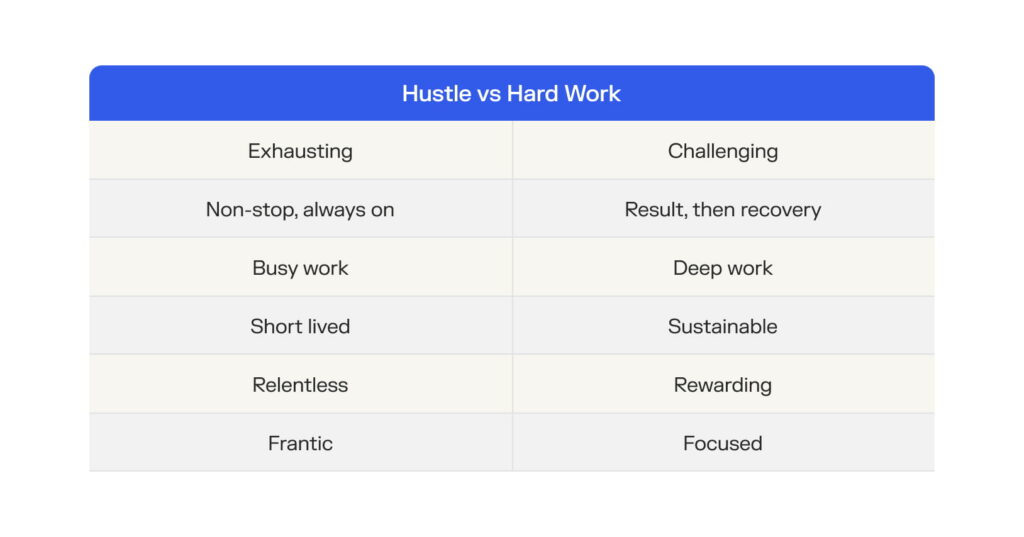
Shelley shares that high performing teams aren’t stuck in a state of relentless hustle. Instead, they operate using deep focused work sprints that move the needle for the business.
💡 Keep learning: Discover effective strategies used by Chief People Officers to manage workplace stress and burnout.
The ‘find, develop, keep’ formula great teams swear by
What is your biggest people challenge? For most leaders, it falls into one of three buckets: finding the right people, developing the team they have, or holding onto top talent long enough to make it count.
Shelley calls this the ‘talent time triangle’.
She argues that high-performing teams don’t treat these as separate problems to solve, but as a single, interconnected system to master. Get one wrong and the others suffer. Get all three right, and you’re well on your way to fostering a high performance team.
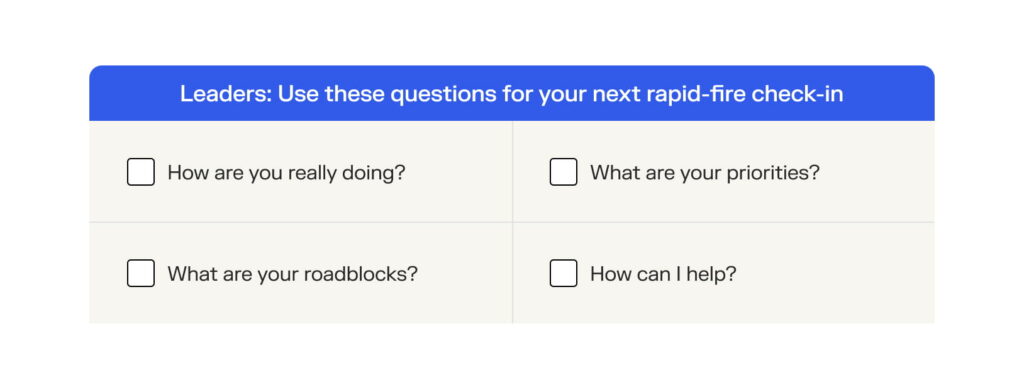
When it comes to preventing burnout, learning how to shift from doing to developing as a leader is crucial. Not through lengthy formal sessions, but through consistent, short check-ins that ask the right questions: what are your priorities, what’s blocking you, and how can I help?
It sounds simple. But according to Marcus Buckingham’s research of 19,000 employees, just a 15-minute conversation every week or two is enough to boost an employee’s commitment, performance and engagement.
💡 Leaders: Use these questions for your next rapid-fire check-in
- How are you really doing?
- What are your priorities?
- What are your roadblocks?
- How can I help?
Plus, your best people are more likely to stick around if you can tap into their internal motivations. Not the external motivators like bonuses, title changes and perks. What really matters is digging deeper into the internal drivers that will make someone feel genuinely fulfilled by their work.
Shelley identifies ten internal motivators and challenges. Leaders should not only identify their own, but aim to understand those of every person on their team. They are:
- Acceptance
- Change
- Freedom
- Order
- Mastery
- Achievement
- Respect
- Influence
- Purpose
- Relatedness
💡 Try this: Ask your team to rank these motivators in order of importance from one to ten. Make sure to pay attention to what sits at the top and bottom of their list. Figuring out what really motivates your team is one of the most powerful yet underrated retention tools you have as a leader.
The three things every high performing team has in common
As a leader, you want to foster a team that’s engaged, hard working and kicking goals. But most teams aren’t operating at their full potential. According to Shelley, it’s because they’re missing one of three critical ingredients: high trust, high expectations or high clarity.
High trust: Closing the gap between promise and practice
Trust is built (and broken) in small, everyday moments at work. Shelley calls this the promise-practice gap, and it shows up in organisations more often than leaders would like to admit.
Common examples include:
- We promise to be open to feedback → We practice getting defensive when it arrives
- We promise it’s safe to fail here → We practice overreacting to minor mistakes
- We promise we’re honest with each other → We practice speaking badly about people when they’re not in the room
The good news is that closing this gap is possible. It starts by taking ownership of it, naming it openly, and committing to consistent action that proves things are changing.
💡 Reflective question: Are there any gaps between what your team promises and what it actually practices? Where do you need to start?
High expectations: Believing people can rise
Setting high expectations means having a genuine, unwavering belief in what your team is capable of, and creating the right conditions for them to achieve it.
Within a high-trust environment, setting this bar for high achievement can help keep your team growing together.
High clarity: Knowing what you’re saying yes and no to
In Shelley’s experience, clarity is the ingredient most teams are missing (and the part that tips even the most motivated teams into burnout).
“Clarity is not the same as certainty. Sometimes the clarity your team needs is simply: ‘We don’t have the answer yet, but here’s what I do know.“
Shelley Johnson
When people don’t have a clear sense of purpose, defined performance standards, or a shared understanding of priorities, they default to doing everything. And doing everything, eventually, means burning out on nothing that particularly matters.
💡 Before you can fix the problem, you need to name it. Which of these zones does your team most recognisably live in?
- Comfort zone = trust + clarity, but no high expectations
- Danger zone = high expectations + clarity, but no trust
- Burnout zone = trust + high expectations, but no clarity
How Sonder can help you build a high performing culture without the hustle
High performance and high wellbeing aren’t in conflict, but they do require intention. If this blog has highlighted gaps in your team’s trust, clarity, or expectations, the next step is making sure your people have the support they need to close them.
Sonder’s 24/7 platform gives employees on-demand access to mental health, medical, and safety professionals so leaders can focus on building great cultures, confident that their people have somewhere to turn when things get hard. With an average engagement rate of 40% compared to the 3-5% typical of traditional EAPs, Sonder provides support that people actually use.
See how Sonder can support your team, request a demo.