At a glance:
- Australia’s women’s health outlook is going backwards. Hologic’s Global Women’s Health Index puts Australia’s 2024 score at 59, its lowest recorded level in five years of tracking.
- Preventive care is falling through the cracks. Just 23% of Australian women get regular cancer screening and only 10% get STI screening, meaning health issues can go undetected until they start affecting work.
- Stress and safety concerns are both climbing. 52% of Australian women report feeling stressed for a significant part of the previous day (above the 38% global average), and more than half don’t feel safe walking alone at night.
- What can be done? Flexible work, better leave and confidential support remain the most effective levers employers have to keep women engaged, healthy and in the workforce.
From menstruation pain to menopause and even fertility issues, female employees face a number of health challenges that can impact their ability to bring their best selves to work. New data shows these challenges are deepening, not easing, which makes the case for employer action stronger than ever.
Big strides have been made in women’s participation in the workforce over the past 40 years. Women accounted for 48% of employed Australians in 2022, up from 36% in 1979 (Australian Institute of Family Studies).
But while workforce participation has grown, women’s unique health and wellbeing challenges are still often overlooked by employers, and they act as a real barrier to meaningful workforce participation and career growth. New research suggests that barrier is getting harder to ignore.
Australia’s women’s health is at its lowest recorded point
Hologic’s Global Women’s Health Index Australia report surveyed women across 144 countries (part of a broader sample of over 145,000 women and men aged 15+, representing 97% of the global adult population). Australia’s Year 5 report, covering 2024 survey data, found the country’s overall score fell to 59 out of 100, still above the global average of 54, but its lowest recorded level, and flat on the previous year.
Over the five years Hologic has tracked this data, every dimension of the index has declined except preventive care:
- Emotional health: down 6 points
- Opinions of health and safety: down 6 points
- Basic needs: down 8 points
- Individual health: down 5 points
Preventive care held steady, but “steady” isn’t the same as “good.” Cancer screening uptake sits at just 23%, and STI screening at 10%. For employers, this matters because untreated or undetected health issues rarely stay contained to someone’s personal life. They show up at work as absenteeism, presenteeism and disengagement.
What unique challenges do women face in the workplace?
Employees’ personal lives have a significant impact on their professional performance. Whether it’s dealing with a sleepless night due to a sick child or feeling the strain of financial pressures at home, it’s difficult for staff to deliver their best work while navigating personal struggles.
For female employees, these challenges are uniquely gendered and often invisible.
Deloitte’s Women @ Women 2024 report surveyed over 5,000 women from 10 countries, revealing that menstrual disorders, menopause and fertility challenges are impacting women at work, but many feel unable to take time off or seek support.
“27% of women don’t feel comfortable speaking up about personal issues related to menstruation, menopause or fertility at work.”
Source: Deloitte
Unfortunately, many women believe their careers will be negatively affected by discussing these issues at work, leading them to work through pain and discomfort, often worsening their wellbeing in the process. Hologic’s data backs this up at a population level: 31% of Australian women report experiencing significant daily physical pain, and 28% say health problems limit their normal daily activities.
Women who have experienced health challenges related to fertility, such as difficulty conceiving, high-risk pregnancy or miscarriage, report similar trends: three in 10 say they haven’t taken time off when experiencing high levels of pain or related symptoms, and nearly two in 10 have taken time off, but haven’t given the real reason (Deloitte).
Other issues that impact women’s wellbeing at work include:
Mental health challenges are worsening
Hologic found 52% of Australian women report feeling stressed for a significant part of the previous day, well above the 38% global average, and negative emotions (worry, sadness, stress, anger) have worsened over the past four years. This lines up with Deloitte’s finding that more than half of women say their stress levels are higher than 12 months ago, with many feeling they’re receiving inadequate support from employers and aren’t comfortable talking about their mental health in the workplace.
Safety concerns follow women beyond the office
More than 50% of Australian women don’t feel safe walking alone at night (Hologic). That echoes findings in Sonder’s own Safety Gap Report 2025, which found 65% of women don’t believe the world is safer than it was six months ago, and 55% have safety concerns for their family, compared with 43% of men. It’s also consistent with AIHW data showing a large gap between how safe women and men feel using public transport after dark. Separately, Deloitte found nearly 1 in 2 women are concerned about their personal safety in the workplace, particularly when commuting or travelling for work, and 16% report dealing with harassment from customers or clients.
Growing caring responsibilities
According to WGEA, 12% of all women in Australia identify as a carer, with women accounting for 7 in 10 primary carers. Increasingly, women are caring for a growing number of family members, from children to adults to ageing parents. Women with more domestic responsibilities have reported lower mental wellbeing and are less able to focus on their careers, too.
Recent research shows that poor mental health (particularly depression and anxiety) is associated with lost productivity in the workforce due to a rise in absenteeism and presenteeism.
How can leaders support women’s wellbeing in the workplace?
For employers, understanding and responding to the challenges women are facing at work needs to be a priority, especially as the data shows things are trending in the wrong direction, not the right one. According to Deloitte, women who are currently looking to leave their jobs regularly cite poor work/life balance and a lack of flexibility among the top reasons driving their move.
There are tangible benefits to prioritising women’s wellbeing at work, from boosting staff morale and engagement to reducing productivity challenges (such as absenteeism and presenteeism) as well as lowering the likelihood of staff turnover.
Practical tips for people leaders on redesigning work to actually work for female employees include:
Making flexible work arrangements accessible
From hybrid working and part-time schedules to compressed work weeks, flexible working is key to enabling women to balance the work/life juggle more effectively. A large majority of Australia’s private sector now offers flexible working arrangements to staff (WGEA), a clear sign these strategies are central to boosting employee wellbeing, improving organisational productivity and attracting and retaining the best talent. Accessibility is key: leaders and managers need to actively encourage and support team members to build a flexible work schedule that works for their needs, backed by clear company-wide policies.
Improving paid leave policies
While paid parental leave is standard practice, workplaces could consider rolling out further paid leave entitlements tailored to women’s unique health challenges. From miscarriages to abortions to adoptions, providing additional paid leave to women navigating these significant life events can go a long way to boosting staff morale, loyalty and engagement.
Offering flexible return-to-work options
After taking time away from work to start a family, the transition back to work should be supportive and flexible. Offering stay-in-touch days, phased returns and gradual ramp-ups can support the adjustment, allowing women to continue participating in the workforce while navigating this new life stage as a parent.
Providing access to confidential support
Managers shouldn’t be left to handle difficult conversations with staff. Giving staff the opportunity to self-nominate and gain professional health support confidentially can remove any fears around seeking help, particularly for female staff who may be concerned about the impacts of personal struggles on their career progression. This matters even more given how low preventive screening rates are: confidential, easy access to a health professional can be the nudge someone needs to get a check-up they’ve been putting off.
How Sonder supports women’s health, wellbeing and safety at work
One of the most effective ways to boost women’s wellbeing at work is to ensure it’s easy for female staff to access the support they need. Sonder’s recent focus on women’s health brought over new articles, videos, and audio clips on the topic to the Sonder app.
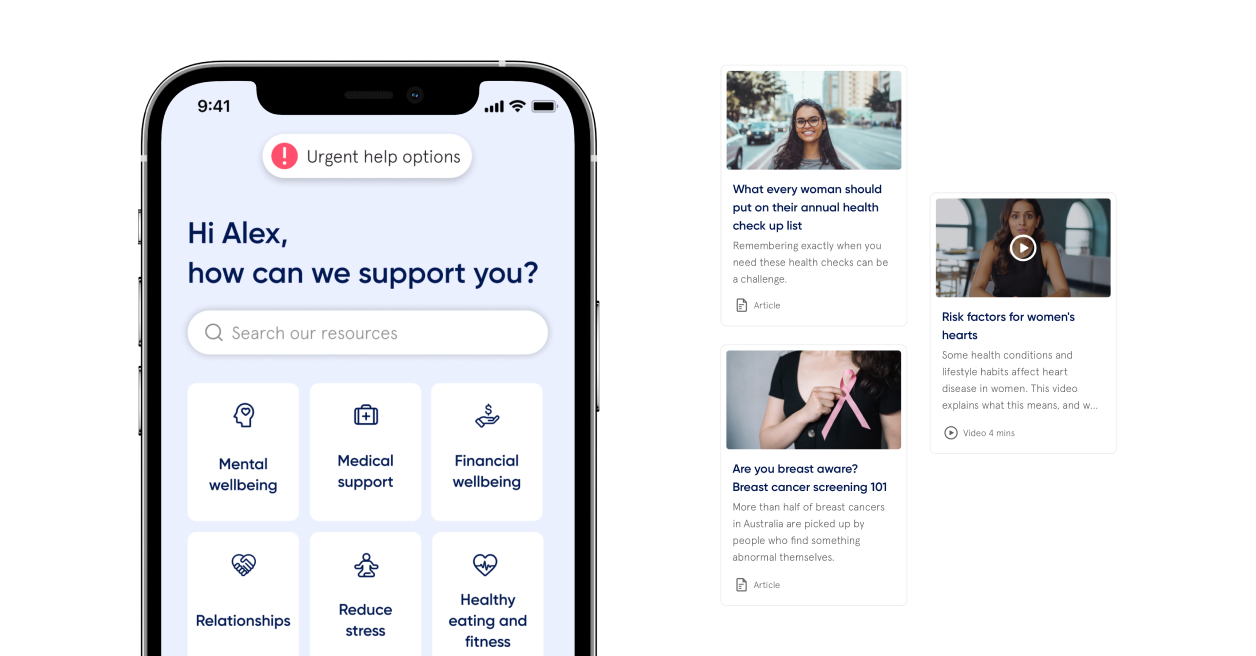
In practical terms, here’s how Sonder solves employee wellbeing and safety challenges to foster a more inclusive workplace for female staff:
- 24/7 support: The Sonder mobile app ensures women can seek out help whenever they need it, rather than being limited to traditional business hours. From on-demand wellbeing resources (like guided meditations to healthy recipes) to the ability to chat with a healthcare professional in seconds, members can seek out support via Sonder at times that suit their schedule.
- Confidentiality for sensitive issues: Sonder’s confidential support service means women are never worried about speaking up about their concerns or seeking help for the medical, wellbeing or safety challenges they’re facing.
- Support for family members: Often the primary caregivers for households, women can also seek support from Sonder’s platform for immediate family members, from children to parents, to reduce barriers to accessing timely, personalised care.
“Last night, my son came up in a rash; I used the medical element of Sonder and had an answer from one of the nurses in 15 minutes and the reassurance I needed. She was thorough and even asked for a follow-up the next day which I thought was wonderful! She was lovely and a great reassurance for myself! Very pleased with the app.”
Sonder Member
- Real-time safety tools: Features like ‘Check on me’ and ‘Track my journey’ ensure female staff can gain discreet safety check-ups from Sonder’s team of first responders at any time, particularly when travelling or commuting to work.
How Sonder can help you prioritise wellbeing at work
Sonder provides 24/7 access to registered nurses and mental health professionals who specialise in women’s health, ensuring employees have a safe, confidential space to manage life stages like pregnancy or endometriosis without the barriers of traditional GP wait times.
With Sonder, you’ll be able to gain the meaningful data and insights you need to understand the unique challenges impacting your people. Plus, employees will gain access to wellbeing resources, assessments as well as 24/7 medical and safety support to improve their daily habits, lifestyle and overall wellbeing.
As a result, employers can ensure they’re providing holistic, preventative employee care that’s accessible, effective and relevant to your organisation.
About Sonder
Sonder is a technology company that helps organisations improve the wellbeing of their people so they perform at their best. Our mobile app provides immediate, 24/7 support from a team of safety, medical, and mental health professionals – plus onsite help for time-sensitive scenarios. Accredited by the Australian Council on Healthcare Standards (ACHS), our platform gives leaders the insights they need to act on tomorrow’s wellbeing challenges today.