At a glance:
- The risk is rising: Woolworths reported more than 7,000 incidents of violence and aggression in 2025, including around 400 involving an edged weapon.
- Silence hides the true scale: Normalisation of violence, uncertainty about how to report, and not knowing what happens next keep frontline workers quiet. Sonder’s Safety Gap Report 2025 found 35% of workers who experienced customer aggression received no support afterwards, rising to 49% in retail.
- Protection takes layers: Woolworths combines tactical controls, safer store design and VR training. In its highest-risk stores, it says its most severe incidents have held steady at 2023 levels.
- The law is catching up: Woolworths says workplace protection orders cut reoffending by 92% in the ACT. Other states and territories are starting to introduce similar laws, but legislation isn’t consistent across the country.
Everyone should feel safe at work. But new data shared at Sonder Summit 2026 reveals more frontline workers are facing traumatic events that can cause physical or psychological harm on the job.
Over the past 12 months, the number of critical incidents reported on Sonder has climbed by 34%, with requests for on-site support from Sonder’s responder network up 110%.
Behind these numbers are real people: standing at checkouts, packing shelves and serving customers. These workers are being yelled at, threatened or even hurt while trying to do their job.
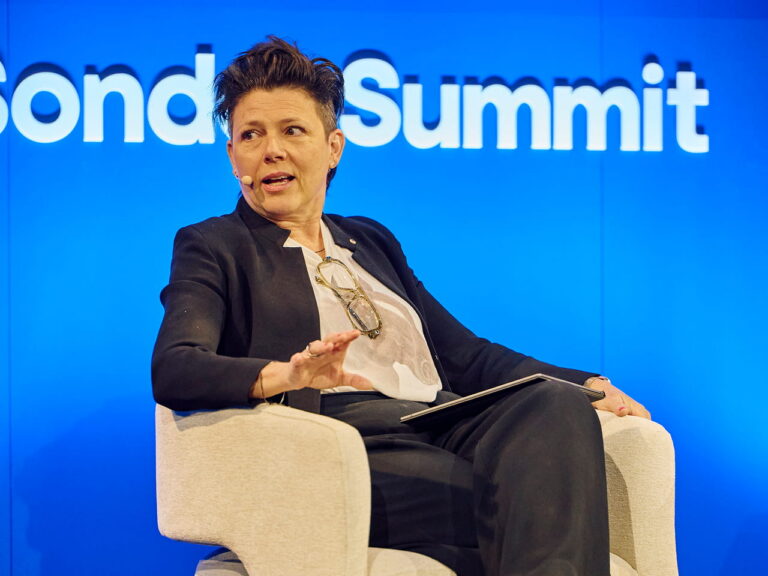
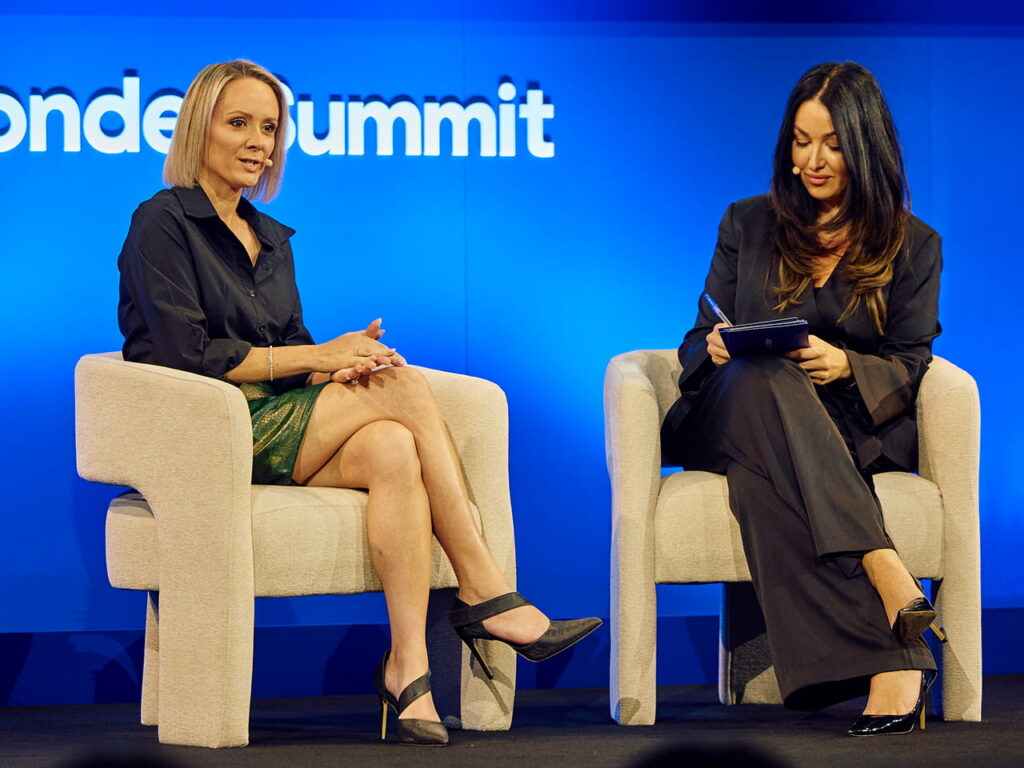
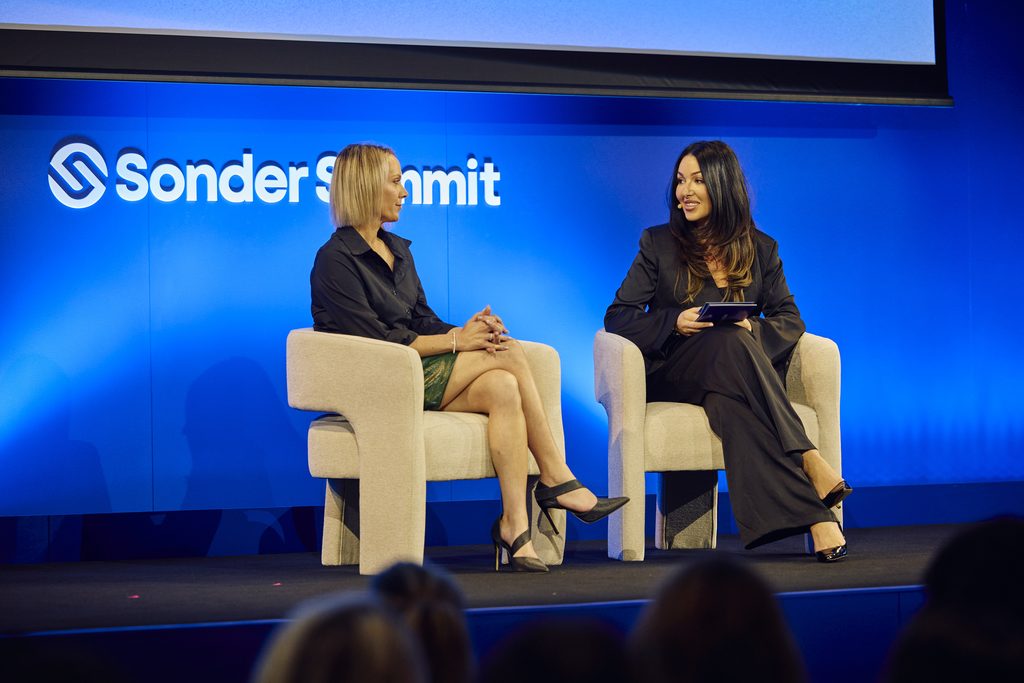
With over 1,700 customer-facing stores across Australia and New Zealand, Woolworths knows this challenge better than most organisations. At Sonder Summit 2026, Sonder’s Julia Bageski sat down with Sarah Faorlin (Head of Acts of Violence and Aggression at Woolworths Group) to walk through how Woolworths is tackling risk from every angle, from VR training to store design through to legislative reform.
Watch the full recording here, or catch up on the highlights below.
Meet the expert: Sarah Faorlin
Sarah Faorlin is Value Lead, Head of Acts of Violence and Aggression at Woolworths Group, where she leads the retailer’s work to protect frontline team members from violence and aggression.
Sarah has spent more than 26 years at Woolworths, starting as a service supervisor in 2000 and moving through customer service management, workplace injury support, HR, commercial and business support roles.
Before taking on her current role in 2024, she was Woolworths’ National Store Loss Manager. Having started on the shop floor herself, Sarah brings a first-hand understanding of the risks frontline teams face every day.
How common are acts of violence and aggression in retail?
Acts of violence and aggression are rising in both volume and severity among retail workers.
In 2025 alone, Woolworths reported more than 7,000 incidents with around 400 involving an edged weapon (such as a knife, machete or pair of scissors) being used against a team member. Each incident involved someone external to the store, covering everything from verbal abuse to physical assault, and even stalking.
Customer violence and aggression became a growing problem for Woolworths during the COVID-19 pandemic. The team assumed that antisocial behaviour (such as verbal abuse and spitting incidents) would phase out once the pandemic, and toilet paper shortages, ended. Unfortunately, the volume and severity of incidents has only increased every year since.
We probably naively at the time thought that acts of violence and aggression were a symptom of the pandemic, and that it would resolve itself once the pandemic was over. And unfortunately, that was not the case.

Value Lead, Head of Acts of Violence and Aggression, Woolworths Group
It’s a trend echoed in recent research by Sonder, with the Safety Gap Report 2025 finding that:
- 79% of those who’ve experienced it say verbal aggression is the most common type
- 65% of workers have experienced customer aggression at work
- 24% experience it at least once a week
What’s driving acts of violence and aggression in retail?
Theft is the single biggest driver of customer violence and aggression in retail. About 40% of Woolworths incidents relate to theft, whether that’s stealing product or robbing cash.
As a result, Woolworths built out risk profiles for each store to decide where to focus their efforts. The team combined incident reports with environmental factors: how close the store is to a transport hub, whether there’s a police station nearby, the surrounding housing, and even when the local court is in session. That exercise identified more than 350 high-risk stores.
It is quite an unfortunate thing that I exist in this role today and that the business has needed to have that role in place, but it really does demonstrate the priority and the focus and the level of investment that Woolworths has made on this critical topic.
Value Lead, Head of Acts of Violence and Aggression, Woolworths Group
Why do frontline workers stay silent about violence and aggression at work?
Frontline workers often don’t report violence and aggression because it’s become normal where they live. Others aren’t sure how to report, whether anyone is listening or what support follows. That silence makes it hard for organisations to understand the true scale of the problem.
Sonder’s data shows that a lack of support is concerningly common for ANZ workers: 35% of employees who experienced customer aggression said they received no support afterwards, up from 29.1% in 2023. Retail workers were particularly impacted, with 49% receiving no support after incidents.
For Woolworths, the team recognised their reporting culture wasn’t where it needed to be. Sarah points to three factors:
- Acclimatisation: In areas where the external risk is high, team members see the same behaviour at home and in their neighbourhood. This normalisation of violence and aggression meant incidents often weren’t escalated.
- Uncertainty about the reporting process: Some team members weren’t sure their reports were being listened to, or what the right avenue to report an incident was.
- Not knowing what happens next: If people don’t understand the support available, reporting can feel pointless.
In response, Woolworths told all frontline workers that every report matters, explained how to submit one and made clear it wants to hear about every incident, big or small.
What is Woolworths doing to protect frontline teams from violence and aggression?
Sarah shared the four ways Woolworths is proactively protecting frontline teams, including tactical controls in high-risk stores, safer store design, realistic training sessions and advocating for legislative change. Here’s how each one works.
What tactical controls does Woolworths use in high-risk stores?
For stores identified as high-risk, Woolworths has rolled out a core set of controls known as ‘the conflict bundle’. First introduced in 2023, these controls have helped to stabilise high-severity incidents and keep the risk of catastrophic injury under control.
| Control | What it is | Why Woolworths uses it |
| Body-worn cameras | Cameras worn by team members. Woolworths was the first retailer to trial them in 2020 | Effective at reducing lower-level verbal abuse |
| Upgraded CCTV | Improved camera coverage in store | Gives police clear evidence to work with |
| Knife controls | Includes toughened clamshell packaging developed with suppliers | Makes knives harder to use in a serious incident |
| Personal safety alarms | Alarms that emit 130 decibels | Team members told Woolworths they were fearful travelling to and from work |
| Two-way headsets | Headsets for calling for help | Easier communication across large-format stores |
| De-escalation training | Face-to-face, with a third-party provider | Builds practical skills for defusing conflict |
| Adjusted trading hours | Opening later or closing earlier | Reduces exposure where risk is concentrated |
Sonder’s personal safety tools can support the journey to and from work, too. Check on Me lets team members schedule safety check-ins, and Track My Journey monitors their route in real time, with Sonder’s Support Centre ready to step in if they don’t check in safely.
How can store design reduce violence and aggression?
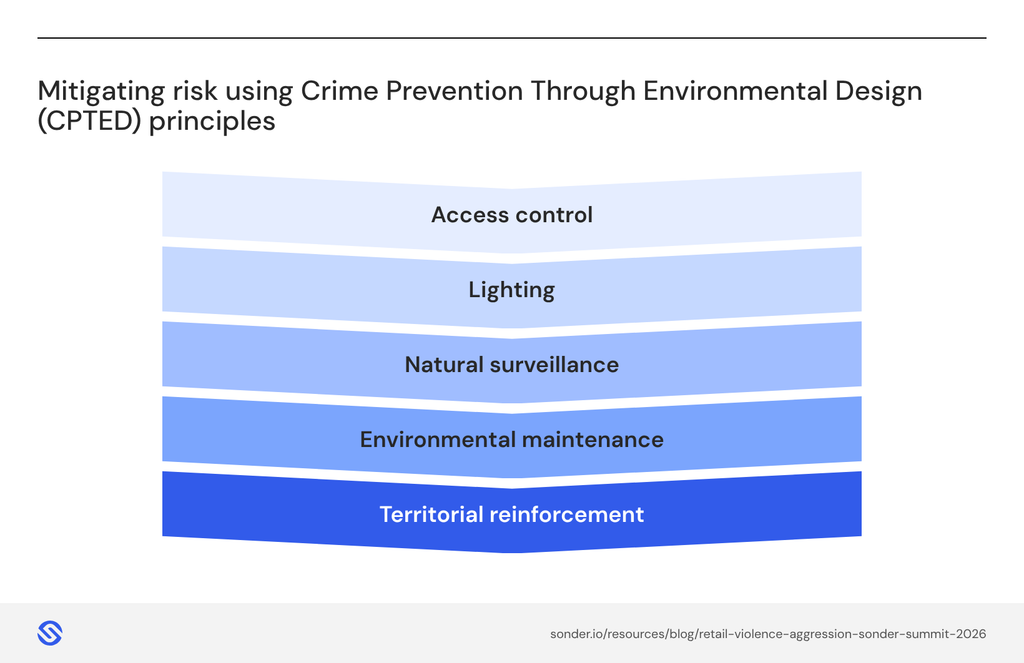
Store design can reduce violence and aggression by engineering risk out, rather than only responding to it. In 2024, Woolworths brought in a Crime Prevention Through Environmental Design (CPTED) consultant to review its store layouts. The guidelines created are now built into every new and renewed store.
The service desk is the highest-risk part of the store, and a spot where prevention through design is most effective. It’s where high-volume interactions, cash and tobacco theft, and aggression all collide. So Woolworths has redesigned it, with:
- A deeper counter and anti-jump bars
- Lower cabinetry to offer clear sightlines from self-checkout to the assisted lanes
- A secondary exit point, so if the desk is breached, team members can escape
How does VR training prepare retail teams for violence and aggression?
Virtual reality training lets team members experience a real incident of violence and aggression, without being in danger. Woolworths has built five VR training modules, all filmed overnight in a real supermarket with actors, so everything looks and feels like the team’s own workplace.
Each module covers common scenarios, particularly around violence and aggression sparked by retail theft. It teaches team members how to assess the risk to their own safety and decide when to interact with a customer and when to disengage. Other modules cover an active armed offender and teach teams how to secure the store and conduct a lockdown.
It’s really hard to emulate and simulate what the lived experience [of customer violence and aggression] is and make it feel real for the team. Virtual reality solves that for us.’
Value Lead, Head of Acts of Violence and Aggression, Woolworths Group
What are workplace protection orders, and where do they apply?
Workplace protection orders (WPOs) let an employer apply to a court for an order against a high-harm offender on behalf of their team, and early results from Woolworths are striking.
Woolworths took out workplace protection orders against 17 high-harm offenders in the ACT. Together, these offenders had been responsible for more than 500 incidents.
Repeat offending is a wider problem for frontline workers. In research cited in Sonder’s Customer aggression report (2024), the SDA found 52% of workers reported the same customer was abusive or violent more than once.
Since the orders came in, Woolworths says reoffending in the ACT has fallen by 92%. In South Australia, Woolworths says there has been a 100% reduction in reoffending since the first orders were made in 2026.
However, legislation isn’t consistent across the country.
| Jurisdiction | WPO status | Details |
| ACT | In place | ACT is the pioneer of this legislation and has been active for several years. |
| Commonwealth | In place | The Commonwealth Workplace Protection Orders Act 2025 took effect on 5 May 2026, covering Commonwealth workplaces. Read our guide to Commonwealth WPOs. |
| South Australia | In place | The Workplace Protection (Personal Violence) Act 2025 officially commenced on 4 May 2026. [TO VERIFY: commencement date] |
| Victoria | Passed | The Workplace Protection Orders Act 2026 passed in August 2026. The government has set a target commencement date of 1 March 2027. [TO VERIFY: Act name against legislation] |
| Western Australia | Bill in progress | WA’s Retail Barring Orders Bill passed the Legislative Assembly in 2026 but, as at September 2026, had stalled in the Legislative Council. |
| NSW | Legislation impending | The NSW Government announced it would introduce its WPO bill to Parliament in October 2026, starting with retail workplaces. The scheme is expected to commence within 12 months of the bill passing. |
| Tasmania | Commitment only | The Tasmanian Government announced in June 2026 that it will introduce WPOs. Draft legislation is expected to be released for public comment later in 2026. |
| Queensland | No formal commitment | Queensland is the only state yet to take formal steps towards introducing WPOs, according to the SDA (August 2026). |
| Northern Territory | No formal commitment | No WPO scheme announced as at October 2026. [TO VERIFY before publishing] |
Status as at October 2026. Legislation is changing quickly, so check the latest position in your state or territory.
We’re advocating to make sure that all of our team members right across the country have the same level of protection against high harm offenders.
Value Lead, Head of Acts of Violence and Aggression, Woolworths Group
What can other organisations learn from Woolworths’ approach to protecting frontline teams?
Woolworths offers a number of practical takeaways for organisations looking to protect frontline workers, including:
- Profile your sites, not just your incident data: Combine internal reports with environmental factors, such as nearby transport hubs and police stations, surrounding housing and local court sitting times. This adds helpful context to your incident reports and helps your team spot trends driving incidents of customer violence and aggression.
- Find your real drivers: Don’t assume it’s all theft. Categorise incidents so you can target the right controls. Using a people risk intelligence platform like Sonder brings de-identified mental health, medical and safety reporting into one portal, with trends you can filter by division and time period.
- Make reporting easy and worthwhile: Tell people why you want the data, then show them what support follows to build trust and create a culture of accurate reporting.
- Train for decisions, not just scripts: Roleplaying or using VR to walk teams through realistic scenarios helps people practise when to engage and when to step away.
Keep learning: Hear how leaders at Best&Less and Yo-Chi Frozen Yoghurt are keeping their frontline workers protected and prepared during the holiday rush.
Final thoughts: Supporting the safety of frontline retail teams
Protecting frontline teams takes multiple steps: tactical controls, smarter store design, realistic training, better reporting and stronger laws. As Sarah put it, this isn’t a ‘set and forget’ risk, and Woolworths expects incident volumes to keep rising as the wider environment gets tougher.
But reporting only works if people know support follows. Team members need compassion from their leaders and personalised support they can access anywhere, anytime after an incident. Sonder also gives managers access to coaching and specialist therapist sessions to help them navigate difficult team situations.
It’s not uncommon for us to see affected employees reach out and engage in Sonder’s support via chat at 2am, up to three or four weeks after an incident.’

Critical Incident Manager, Sonder
Sonder supports frontline workers with 24/7 access to trained support staff, who respond in 30 seconds or less via app or phone. When a situation needs someone there in person, Sonder’s critical incident response sends employed, trained Sonder Responders on site, and 93% of members were satisfied with Sonder’s response after critical incidents, including customer aggression.
For Woolworths, partnering with Sonder has delivered a single point of access to round-the-clock support. Half (50%) of Woolworths team members say they would not have sought help without Sonder, and 38% of support cases happen at night, when many traditional support services aren’t set up to respond.
Book a demo to see how Sonder can support your frontline teams, or keep learning by watching every Sonder Summit 2026 session on demand.
FAQs
Violence and aggression in retail covers any act by someone external to the store, from verbal abuse and threats to kill through to physical assault, threats with a weapon and stalking. That’s how Woolworths defines ‘acts of violence and aggression’, and it doesn’t cover issues between team members.
Violence and aggression against retail workers is common and rising. Woolworths reported more than 7,000 incidents in 2025, including around 400 involving an edged weapon. Sonder’s Safety Gap Report 2025 found 65% of workers across Australia and New Zealand have experienced customer aggression at work, and 24% experience it at least once a week.
Retail workers often don’t report violence and aggression because it has become normal where they live. Others aren’t sure how to report, whether anyone is listening or what support follows. Woolworths responded by telling every team member that each report matters and explaining how to make one.
There’s no single fix to reduce violence and aggression in retail stores, so Woolworths layers its controls. These include body-worn cameras, upgraded CCTV, knife controls, personal safety alarms, headsets, de-escalation training and adjusted trading hours. Its highest-risk stores also get bespoke site assessments, and new stores are designed to reduce risk.
Employers should support workers straight after customer aggression and keep supporting them well after the incident, because the impact often shows up days or weeks later. Sonder’s Safety Gap Report 2025 recommends clear follow-up processes and leaders trained to protect emotional and physical safety. Access to 24/7 support also helps, particularly for shift workers and people working alone.
A workplace protection order (WPO) lets an employer apply to a court for an order against a high-harm offender on behalf of their team. Depending on the jurisdiction, an order can ban someone from a workplace or stop them contacting staff. Woolworths says orders in the ACT have cut reoffending by 92%.
As at October 2026, workplace protection orders are in place in the ACT and South Australia, and for Commonwealth workplaces. Victoria has passed laws due to start in March 2027, NSW is introducing legislation and Tasmania has committed to the scheme. Western Australia’s bill has passed its lower house but not yet its upper house, and Queensland hasn’t yet taken formal steps.
Crime Prevention Through Environmental Design (CPTED) means designing spaces to reduce the risk of crime and aggression. Woolworths used a CPTED review to redesign its service desks with deeper counters, anti-jump bars, clearer sightlines and a second exit.