At a glance:
Uncertainty drives stress, not just workload: When the brain doesn’t know what’s coming next, it triggers a fight-or-flight response that narrows focus and makes decisions harder.
Small techniques create fast resets: Labelling emotions, slow-exhale breathing and grounding through the senses can shift the nervous system out of alert mode in under a minute.
Chronic stress erodes brain performance: Prolonged pressure can lead to excitotoxicity, where overworked neurons show up as unreliable memory, scattered focus and reduced creativity.
Leaders shape team stress, not just their own: Small practices, like pausing before meetings and modelling healthy boundaries, help teams manage pressure before it builds.
Deadlines are looming, priorities are shifting, and your team’s stress levels are rising. Yet as a leader you’re expected to navigate it with clarity and composure.
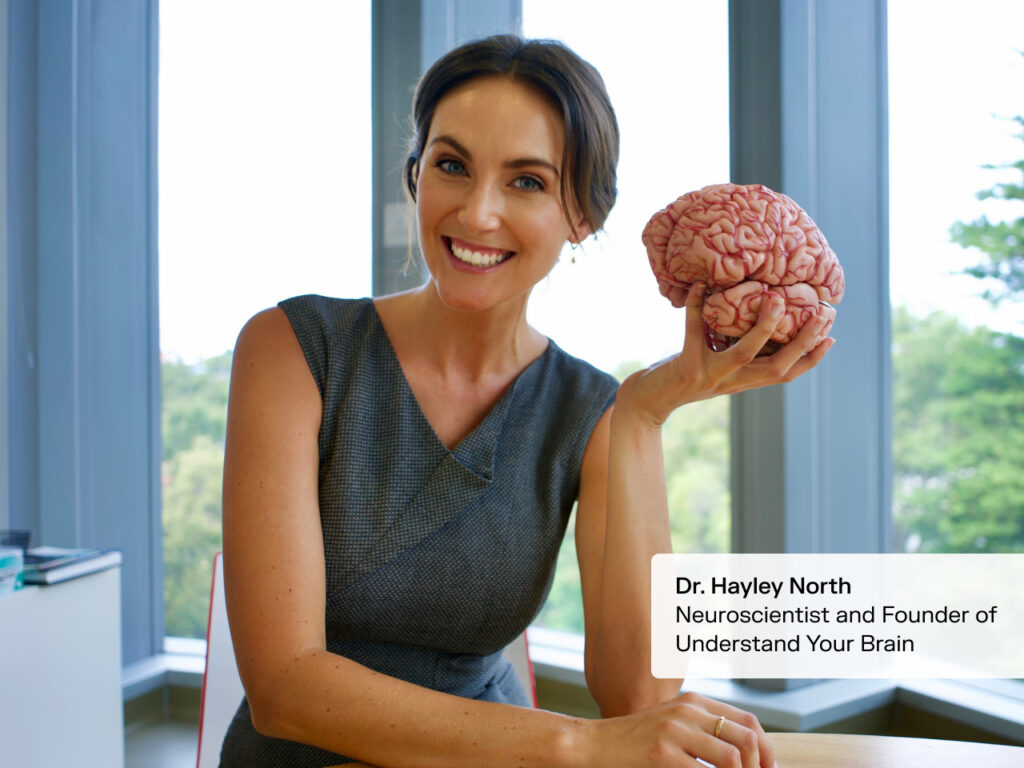
We understand that’s not always possible, which is why we enlisted the help of Neuroscientist Dr. Hayley North, for a masterclass in managing stress.
She revealed that — contrary to popular belief — it’s not always the workload that overwhelms us. Often, it’s the uncertainty that leaves us feeling like we’re lacking control. Dr. North explains that when the brain doesn’t know what’s coming next, it activates the fight-or-flight response. Focus narrows, emotional regulation dips, and even simple decisions can feel disproportionately hard.
Navigating the realities of stress requires learning how to work with it. Below, we share some of Dr. North’s quick, high-impact techniques to help your team regulate stress in real time. Because when stress hits, people need simple, accessible tools to quickly reset, regain clarity, and stay in control — and as a leader, you can help make that possible.
If you’re looking to go deeper into the neuroscience behind these strategies (and understand the bigger picture), be sure to check out the full webinar.
Meet the expert: Dr. Hayley North
Dr. Hayley North specialises in how stress and uncertainty impact brain function and performance. Her work focuses on translating neuroscience into practical, real-time strategies that help individuals regulate stress, improve decision-making, and maintain clarity under pressure, particularly in high-demand workplace environments.
Stress tip one: Name it to tame it
One of the most immediate ways to reduce stress is also one of the simplest: name what you’re feeling.
Stress often operates below conscious awareness, driving reactions before we’ve had a chance to process what’s happening. By labeling the emotion — “I’m anxious,” “I’m overwhelmed” — you interrupt that automatic response and bring the brain back to focus.
For a leader about to walk into a high-stakes meeting, this might look like a brief pause: “I feel nervous, but I’m prepared.” That small moment of awareness can reduce intensity and create space for clearer thinking.
Giving stress a label can actually reduce many of its negative effects. When I first learned this, it felt too good to be true. But neuroscience shows that much of our stress response happens below our conscious awareness. When we deliberately pay attention to it, bringing it into awareness by labeling the stress, we begin to take our bodies off autopilot and interrupt the cycle.

Neuroscientist and Founder
Stress tip two: Breath as a reset
Stress is both psychological and physiological. That means one of the fastest ways to shift it is through the body, particularly through breath.
A technique Dr. North recommends is straw breathing:
- Inhale for four counts… 1, 2, 3, 4
- Exhale slowly for eight through pursed lips… 1, 2, 3, 4, 5, 6, 7, 8
- Repeat a few times
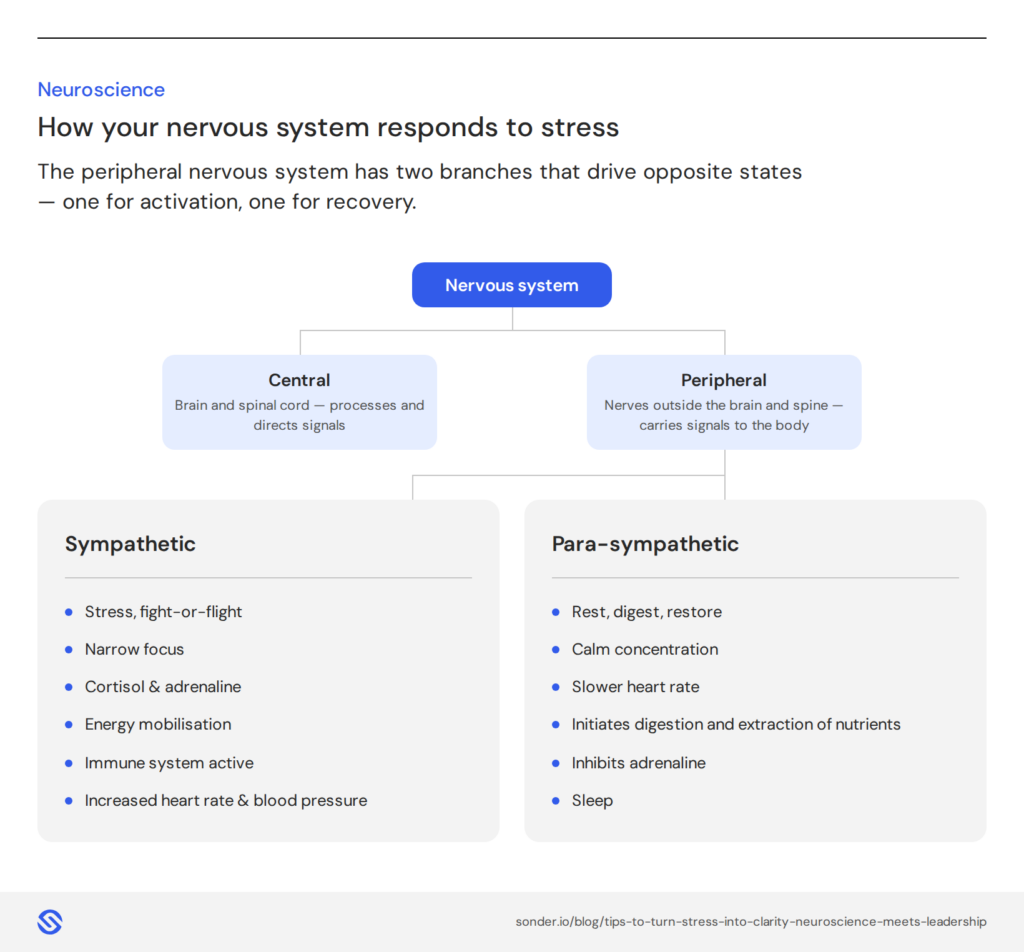
The key is to focus on a longer, slower exhale, rather than breathing out all at once. Think of it like exhaling through a straw. This extended exhale signals safety to the brain, activating the parasympathetic nervous system, the body’s “rest and digest” mode.
It’s simple, discreet, and effective. Whether you’re about to present to the board or respond to a challenging conversation, even 30 seconds can create a noticeable shift.
I used the straw breathing technique before my TEDx talk. It calmed my nerves faster than any pep talk could.
Neuroscientist and Founder
Stress tip three: Grounding through the senses
When stress takes over, the mind tends to spiral into “what if” thinking. A powerful way to interrupt this is by bringing attention back to the present through the senses.
Dr. North suggests a simple grounding exercise: notice what you can see, touch, hear, smell, and taste. This redirects brain activity away from anxiety-driven regions and into sensory processing, helping the nervous system settle.
In practice, this might look like pausing during a tense moment in the workday (perhaps after a difficult email or meeting) and taking 60 seconds to reconnect with your surroundings.
It’s like flipping a switch in your brain. Suddenly you’re present, and the stress chemicals start to settle.
Neuroscientist and Founder
Stress tip four: Micro-movements matter
While exercise is widely recognised as a stress reliever, it doesn’t have to mean a full workout. In fact, small, consistent movements throughout the day can be just as powerful.
When stress builds, the body is primed for action, but modern work often keeps us sitting still. Micro-movements — like standing, stretching, or taking a short walk — help release built-up energy and signal to the brain that the threat has passed.
For leaders, this might mean intentionally building small movement breaks between meetings, rather than pushing through back-to-back sessions.
Fight or flight used to mean fighting something, running away, or hiding. So that's why we get that increase of glucose, you know, blood sugars, cortisol, and adrenaline, those stress hormones. So if we don't exercise, that energy, that adrenaline and cortisol keep building up.
Neuroscientist and Founder
You don’t need a marathon. Just move in ways that remind your brain: I’m not in danger. I can relax now.
Read more: Effective strategies used by Chief People Officers to manage workplace stress and burnout.
Stress tip five: Separate the signal vs. noise
Not all stress comes from big moments. Often, it’s the accumulation of constant, low-level inputs (think emails, notifications, Slack or Teams messages) that keeps the brain in a state of alert.
Learning to distinguish between what truly matters (signal) and what doesn’t (noise) is a critical leadership skill. Without it, the brain stays in reactive mode, constantly “firefighting.”
A simple reframing can help: Does this require action now, or can it wait? Over time, this builds better focus, reduces cognitive load, and protects against chronic stress.
Stress tip six: Consider how leadership shapes team stress
Beyond individual stress, leaders play a key role in mitigating and managing team stress.
Dr. Hayley North explains that when we’re under prolonged or chronic stress, our brain can start to feel the strain. Neurons may become overworked, sometimes shrinking or functioning less effectively over time. In neuroscience, this is referred to as excitotoxicity, where brain cells are pushed beyond their limits and begin to break down.
This can show up in subtle but important ways. Memory might feel less reliable, focus might feel scattered, and we may notice ourselves making more errors. Creativity can also dip, making it harder to solve problems or adapt as we usually would.
For organisations and senior leaders, this offers an important perspective. When people are supported in managing stress, their ability to think clearly, adapt, and perform at their best is supported, too.
Creating space for open conversations about stress, recognising individual differences, and embedding small recovery practices into the rhythm of work can have a compounding effect.
This doesn’t need to be complex. It could be as simple as starting meetings with a short pause, encouraging walking 1:1s, or modelling healthy boundaries.
You can’t control everything that happens, but you can control how you and your team handle it.
Neuroscientist and Founder
When it comes to stress management, the foundations still matter
While these techniques offer powerful ways to manage stress in the moment, they work best when supported by the fundamentals of health: sleep, exercise, and social connection.
These are the baseline conditions that allow the brain to function well. Without them, even the most effective strategies will have limited impact. Think of it as the difference between hardware and software. The basics keep the system running; the techniques optimise its performance.
Sometimes, however, as leaders, we have too much on our plates to catch the signs of stress early.
Sonder equips managers with the tools and expertise needed to lead their teams effectively, while safeguarding their own wellbeing. By providing professional guidance and personalised resources, Sonder helps managers navigate the complexities of leadership, prevent burnout, and create productive, resilient teams.
Here are three practical ways Sonder can help you and your team manage stress:
- Self-paced, self help resources: Sonder’s wellbeing library offers meditations, sleep scapes, soothing playlists and articles written by experts to help your team manage pressure day-to-day.
- Counselling services for everyday support: When members need support beyond self-care, but don’t require clinical psychology, our counsellors offer compassionate, talk-based therapy to help them develop coping mechanisms.
- Dedicated manager support: By providing professional guidance and personalised resources, Sonder helps managers navigate the complexities of leadership while preventing stress and burnout.
Explore more about Sonder or watch the full webinar.
FAQs
It’s often not the workload itself, but the uncertainty around it. When the brain doesn’t know what’s coming next, it activates the fight-or-flight response, narrowing focus and making even simple decisions feel harder, according to neuroscientist Dr Hayley North.
Naming it to tame it means labelling what you’re feeling in the moment, such as “I’m anxious” or “I’m overwhelmed.” This simple act interrupts the automatic stress response that runs below conscious awareness, bringing the brain back into focus before a high-stakes moment.
Straw breathing means inhaling for four counts, then exhaling slowly for eight through pursed lips, as if breathing through a straw. The longer exhale signals safety to the brain and activates the parasympathetic nervous system, the body’s rest and digest mode, creating a noticeable shift in as little as 30 seconds.
Grounding interrupts anxious “what if” thinking by bringing attention back to the present. Noticing what you can see, touch, hear, smell and taste shifts brain activity from anxiety-driven regions into sensory processing, helping the nervous system settle in around 60 seconds.
Stress primes the body for action, releasing cortisol and adrenaline. Small, consistent movements, like standing, stretching or a short walk, help release that built-up energy and signal to the brain that the threat has passed, without needing a full workout.
Signal is what genuinely needs your attention now; noise is the constant low-level input, like emails and notifications, that keeps the brain on alert without requiring immediate action. Asking “does this need action now, or can it wait?” reduces cognitive load and protects against chronic stress over time.
Prolonged stress can lead to excitotoxicity, where overworked neurons shrink or function less effectively over time. This can show up as unreliable memory, scattered focus, more errors and reduced creativity, which is why managing stress early matters for both individuals and teams.