
At a glance:
- 1,600 incidents a day. The British Retail Consortium recorded an average of 1,600 incidents of violence and abuse against UK retail workers every day between September 2024 and August 2025, the second-highest level on record.
- A measurable mental health toll. Sustained exposure to threats and violence is now linked to anxiety, depression and PTSD among shop workers, conditions more commonly associated with military service.
- New laws don’t fix the psychological harm. The Crime and Policing Act 2026 introduces a standalone offence for assaulting a retail worker, but legislation is built for deterrence and prosecution, not for the harm already absorbed by staff.
- Early intervention closes the gap. Traditional EAPs see utilisation fall as low as 2% in retail. Workers need support built around the shop floor, not a service they have to go looking for.
The owner of an ice cream parlour and toy shop in Cornwall has performed more than 50 citizen’s arrests. He has been physically injured restraining shoplifters. His greater concern, he says, is not his own safety but the lasting effect these confrontations are having on his staff, who he says are left feeling insecure and unsafe in their own workplace.
His experience is far from unusual. Across the UK, retail workers are enduring a level of violence, abuse and psychological harm that would be considered intolerable in almost any other profession.
Sonder’s own research into UK frontline and young workers found similarly stark results. “We’ve seen this in our own data. 1 in 10 retail workers said they’d been threatened with physical assault, and more than half had thought about leaving the job because of their health and wellbeing,” says Nick Matthews, VP & General Manager UK at Sonder.
The data behind the customer aggression crisis
The British Retail Consortium’s Crime Report 2026, covering September 2024 to August 2025, recorded an average of 1,600 incidents of violence and abuse against retail workers every day. Within those figures:
- 118 incidents of physical violence and 36 involving weapons, recorded each day.
- 5.5 million detected shoplifting incidents over the year, at a cost of nearly £400 million from shop theft alone.
- A 20% fall on the previous year’s figure of 2,000 daily incidents — but still the second-highest level on record, and roughly three and a half times the pre-pandemic rate.
USDAW’s Freedom From Fear survey, published in March 2026, paints a similarly stark picture. Of more than 8,980 frontline retail staff surveyed:
- 78% reported being verbally assaulted in 2025.
- 54% had been threatened, up from 43% in 2019.
- The share who experienced physical assault more than doubled over the same period, from 5% to 11%.
USDAW has linked the escalation to cost-of-living pressures: rising desperation is driving more people to steal, and staff are left absorbing the consequences on a daily basis
From the shop floor to the front line
The Association of Convenience Stores’ Crime Report 2026 estimated around 59,000 incidents of violence in the convenience sector alone last year, alongside 1.2 million incidents of verbal abuse. For smaller, independent retailers without the security infrastructure of larger chains, that exposure is even more acute.
Confronting a shoplifter is consistently identified as one of the biggest triggers for violence, placing workers in an impossible position: intervene and risk assault, or stand aside and accept the loss. An estimated 14 million people have witnessed abuse or assaults on high streets, and two-thirds of attacks on retail staff are reported to begin with theft.
“Industry-wide, we need to challenge the notion that the customer is always right. At a certain point, a customer stops being a customer and starts becoming a risk.” — Rebecca Goulter, former Director of Marketing and Events, National Retail Association (Australia)
The psychological toll is mounting
The physical danger is only part of the picture. The cumulative effect of repeated abuse, threats and violent encounters is producing a measurable mental health crisis among retail workers.
Research from City St George’s, University of London has found that rising violent retail crime is causing long-lasting anxiety and post-traumatic stress disorder among shop workers. PTSD, more commonly associated with military service, is now being identified in retail employees who face sustained exposure to threat and aggression.
The Retail Trust has reported that two-thirds of workers who experienced abuse said it left them feeling anxious and stressed, and that nearly half (47%) did not feel safe at work. For 43% of employees, the deterioration in their general wellbeing over the past year had gone beyond what they felt able to manage.
Researchers at the University of Manchester’s Alliance Manchester Business School, who work directly with retailers on violence and aggression, have found that workplace aggression and mistreatment are deeply damaging to both mental and physical health, contributing to depression, hypervigilance, flashbacks and chronic anxiety.
“Frontline staff are taking the brunt of it. The general stress in the broader community around cost of living is potentially having people act in a way they probably would not like to with frontline workers, and that customer aggression is really impacting employee wellbeing.” — Peter Burnheim, Co-founder, Sonder
The consequences extend well beyond the individual. Absenteeism, disengagement, falling productivity and rising turnover are all documented outcomes, and concerns about personal safety are a consistent factor in frontline and lone workers leaving a role entirely. One in ten workers are at risk of leaving the workforce entirely in the next 12 months.
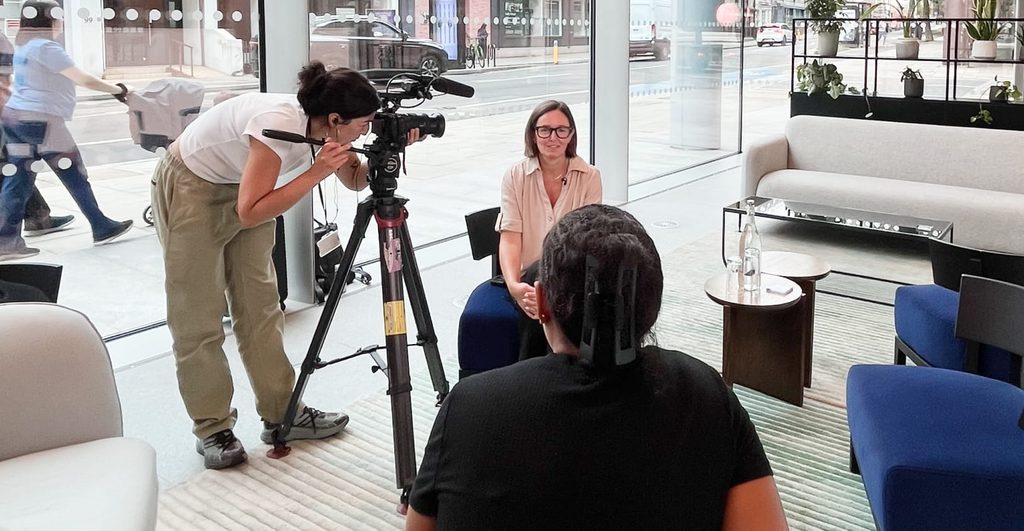
Nicola Fisher, Head of Member Support at Sonder recently joined ITV News, to discuss the scale of retail abuse in the UK and share insight data from Sonder’s Absenteeism Crisis report on the toll it’s taking on frontline staff.
“Frontline workers have got in touch after witnessing armed robbery, been subjected to intimidation and shouting, or having had customers throwing things off the shelves.”
Nicola Fisher, Head of Member Support at Sonder
Legislative and industry response
The government has responded with the Crime and Policing Act 2026, which received royal assent in May 2026 and introduces a standalone offence for assaulting a retail worker. It also removes the £200 threshold that previously allowed low-value shop theft to be treated less seriously — a provision that had created a widespread perception among both retailers and offenders that police would not respond to lower-value incidents.
Retailers have invested heavily in prevention too. The BRC reports nearly £5.5 billion spent on security over the past five years, including CCTV, body-worn cameras, undercover guards and data analytics. Police incident attendance has improved, though only 13% of retailers rated the police response as good or excellent.
There are early signs the combined effort is paying off. Alongside the BRC’s reported fall in incidents, the Association of Convenience Stores’ Crime Report 2026 described a “turning point” in the battle against shop theft. But a falling incident count doesn’t undo the psychological toll already carried by the workers who lived through it. Legislation and security spend are oriented toward deterrence and prosecution — they don’t address the harm already being absorbed by frontline workers every day.
Why early intervention matters
This is where wellbeing support becomes critical. Traditional employee assistance programmes typically see utilisation of around 5%, and in industries like retail, construction and manufacturing, that figure can fall as low as 2%. They’re often not built for workforces where incidents are frequent, unpredictable and physically confronting.
Retail workers need support that meets them where they are: on the shop floor, at the end of a late shift, in the minutes after a threatening encounter. They need access that doesn’t depend on waiting lists, geography or the courage to pick up a phone and describe what happened.
In the UK, this is fundamentally an absence prevention problem. Every incident of customer aggression that goes unsupported risks becoming a sick day, then a period of extended leave, then a resignation. Sonder’s own data shows that members who engage with the platform after a customer aggression incident reduce unplanned absences by up to 12.5%, evidence that acting early doesn’t just support the individual, it protects the business too.
How Sonder supports retail workers facing customer aggression
This is the gap Sonder was built to close. As a people risk intelligence and prevention platform, Sonder is built around one idea: care that starts before crisis. Available 24/7 through a single app, it connects members with care specialists, nurses, psychologists, social workers and emergency-trained professionals, typically responding in 30 seconds or less. Personal safety tools like Track My Journey and Check on Me give lone workers and late-shift staff real-time support, and in cases of customer aggression or a threatening incident, Sonder’s support centre can dispatch a trained responder directly.
The approach is grounded in early intervention: reaching people before a difficult moment becomes a mental health condition, and before a series of difficult moments becomes a resignation letter. It’s the same principle Woolworths Group found when it rolled out Sonder to over 220,000 team members: many staff said they would not have sought help at all if the platform hadn’t been there, and Sonder’s own member feedback indicates 91% report feeling better after using it.
For retailers, the business case is increasingly clear. Every worker who develops PTSD, takes extended leave or leaves the sector entirely represents a cost that no amount of security technology can recover. Investing in the wellbeing of the people behind the till isn’t a discretionary benefit. In an industry facing 1,600 incidents of violence and abuse every day, it’s a strategic and moral necessity.
Frequently asked questions
An average of 1,600 incidents of violence and abuse against retail workers every day, according to the British Retail Consortium’s Crime Report 2026, covering September 2024 to August 2025. That’s the second-highest level on record, despite a 20% fall on the previous year.
Sustained exposure to customer aggression has been linked to anxiety, depression and PTSD among UK shop workers, conditions more commonly associated with military service, according to research from City St George’s, University of London.
The Crime and Policing Act 2026 introduces a standalone offence for assaulting a retail worker and removes the £200 threshold that previously allowed low-value shop theft to be treated less seriously.
Traditional employee assistance programmes typically see utilisation of around 5%, falling as low as 2% in retail, because they’re often not built for workforces facing frequent, unpredictable, physically confronting incidents.