Employers have a responsibility to protect their employees’ physical and psychological wellbeing. That means being aware of the psychosocial risks your people face, from heavy workloads and tight deadlines to unclear roles, workplace bullying, or feeling isolated while working remotely.
These risks might not always be visible, but they can have a real impact on your team’s mental health, job satisfaction, and overall productivity. Left unchecked, they can lead to stress, burnout, and absenteeism, with consequences for both the individual and the wider organisation.
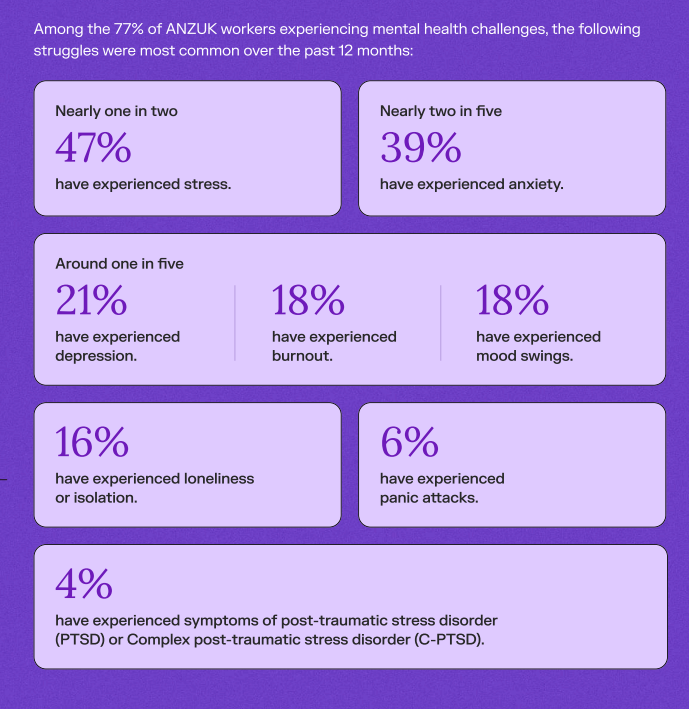
Sonder’s State of Employee Health and Wellbeing Report, which included insights from employees across the UK, Australia, and New Zealand, found that 77% of workers reported experiencing poor mental health symptoms over the past year. Yet, only 17% accessed workplace support when they needed it most. That’s a huge gap but also an opportunity for organisations to step in and genuinely support their people.
As companies aim to retain top talent and prioritise employee wellbeing, the need to identify and manage psychosocial risks has never been more critical.
Read on to discover what you need to know about preventing these risks and how to create a supportive environment where people can bring their best selves to work.
What are psychosocial risks?
Psychosocial risk is anything in the workplace that could negatively impact someone’s mental health or social wellbeing. Unlike slips, trips, or other physical hazards, these risks may not be immediately visible, but their impact can be just as serious.
They include things like:
- High workloads or unrealistic deadlines
- Lack of control over your work or schedule
- Poor leadership or unsupportive management
- Bullying or harassment
- Job insecurity or unclear roles
Often, these risks don’t act alone. When multiple factors pile up, the effect on employees can compound. That’s why understanding and proactively managing psychosocial risks is so important.
What are the common causes of psychosocial risks in UK workplaces?
Understanding where risks tend to arise is the first step to creating a healthier, more supportive environment.
Let’s look at three of the most common causes of psychosocial risks in the workplace.
1. Heavy workloads and work‑life imbalance
Work-related stress is one of the most common mental health issues in Great Britain. In 2024–25, 964,000 workers reported stress, depression, or anxiety attributed to work. Excessive demands, especially without sufficient control or recovery time, take a real toll on wellbeing.
2. Lack of leadership support
Managers have a huge influence on how safe and supported employees feel. Poor leadership — whether through inconsistent communication, lack of empathy, or failure to recognise early signs of stress — can heighten psychosocial risk. When managers are equipped with the right training, they can make a profound difference.
3. Limited risk assessment and follow‑through
Only about one in five (18%) UK organisations formally assess work‑related stress as part of their risk management processes. Without structured assessment, psychosocial risks often go unnoticed and unresolved, leaving employees unsupported.
How psychosocial risks affect people and organisations
Psychosocial risks affect mental health and ripple through teams and organisations.
For individuals:
- Stress, anxiety, and depression: Prolonged exposure to unmanaged risks can trigger or worsen mental health conditions.
- Burnout and exhaustion: Chronic fatigue and emotional exhaustion can develop when support is lacking.
- Reduced engagement: Employees under constant pressure may struggle to stay motivated or connected to their teams.
For organisations:
- Absence and turnover: Stress-related absences cost UK workplaces millions of days each year, creating extra pressure for remaining employees.
- Lower productivity: It’s hard to focus or innovate when psychosocial risks weigh heavily.
- Wider costs: Lost output, recruitment, and training all add up, affecting organisational performance.
Four practical strategies for managing psychosocial hazards in the workplace
Addressing psychosocial risks proactively can make a real difference. Sonder aligns its approach with ISO 45003 and HSE guidance, ensuring UK employers meet regulatory expectations while genuinely supporting employees.
In a nutshell, there are four practical steps employers can take to mitigate and manage psychosocial risks.
Strategy 1. Offer after-hours support
Support is critical to managing psychosocial hazards in the workplace and ensuring employee wellbeing isn’t negatively affected. However, for many employees, such support isn’t made available, be it from their manager or in the form of wellbeing programs and resources.
To address this, organisations should consider offering wellbeing support that extends beyond work hours to ensure more people can get the support they need when they need it.
For example, at Sonder, we offer employees 24/7 access to our comprehensive app, which gives staff a range of resources and personalised support at their fingertips. From personal wellbeing assessments and self-serve preventative care tools to medical advice and safety support, employees can access this whenever they need it, at any time of the day.
Strategy 2. Embrace empathetic leadership
Empathetic leadership is a powerful strategy for managing psychosocial risks in the workplace. By fostering an environment of understanding and support, empathetic leaders can enhance employee wellbeing and ensure staff feel supported to voice concerns without fear of repercussions.
Employers can start by actively listening to employees’ concerns, validating their feelings, and providing appropriate, timely support. Regular check-ins and open communication channels help create a sense of trust and safety, allowing employees to express their challenges without fear of judgement. Additionally, empathetic leaders can promote work-life balance by encouraging flexible work arrangements and respecting boundaries.
Strategy 3. Upskill your leaders
Leaders need the skills and confidence to manage psychosocial hazards and mitigate associated risks effectively, which makes upskilling imperative. By providing leaders with professional development opportunities to upskill in areas like emotional intelligence, conflict resolution, and stress management, managers can gain the skills needed to identify, address, and prevent psychosocial hazards.
Through leadership development programs, managers can adopt a proactive approach to fostering open and supportive dialogues with employees, enhancing their ability to create a psychologically safe environment. Educating leaders on recognising the early signs of stress and burnout ensures timely interventions, addressing issues before they escalate.
Ultimately, upskilled leaders are best positioned to promote healthy work practices. From encouraging regular breaks to creating an inclusive work environment, employers who invest in the development of their leaders can create a more resilient and supportive workplace.
Strategy 4. Act swiftly on bullying and harassment complaints
When it comes to bullying and harassment in the workplace, employers should have a zero-tolerance policy. This involves setting clear expectations for appropriate behaviour at the time of recruitment, throughout induction, and in ongoing training and communications.
When bullying and harassment do occur, it’s important that organisations act swiftly and investigate complaints in a timely and appropriate manner to mitigate the risk of any further undue harm and ensure that the employee reporting such behaviour is supported.
How to promote a supportive work environment
Promoting a supportive work environment is crucial to managing psychosocial hazards, mitigating psychosocial risks, and improving employee wellbeing. This can range from cultivating a culture of respect and inclusion, to implementing regular team-building activities, and upskilling leaders to recognise the early signs of burnout.
By addressing psychosocial hazards with urgency, employers can mitigate risks and create a more engaged and productive workforce. Ultimately, investing in the mental and emotional wellbeing of employees is an investment in the larger company, ensuring staff are motivated and able to bring their best selves to work.
With Sonder, personalised support is provided 24/7, so employees can access advice whenever needed. With a comprehensive app that offers a holistic suite of tools, employers can manage psychosocial hazards in the workplace and empower employees to make their health, wellbeing, and safety a priority.Discover how much a modern approach to employee care could save your business with our ROI calculator.
Or get in touch with Sonder today to chat about how our platform can benefit your organisation and protect your workplace from psychosocial hazards.
Discover how much a modern approach to employee care could save your business with our ROI calculator. Or get in touch with Sonder today to chat about how our platform can benefit your organisation and protect your workplace from psychosocial hazards.
About Sonder
Sonder is a technology company that helps organisations improve the wellbeing of their people so they perform at their best. Our mobile app provides immediate, 24/7 support from a team of safety, medical, and mental health professionals – plus onsite help for time-sensitive scenarios. Accredited by the Australian Council on Healthcare Standards (ACHS), our platform gives leaders the insights they need to act on tomorrow’s wellbeing challenges today.