
At a glance
- What it is: Low job control happens when employees have little say over how, when, or at what pace they do their work.
- How common it is: It featured in 4% of Sonder’s psychosocial support cases between May 2025 and May 2026, and is likely underreported, as employees often don’t name it directly.
- A growing AI risk: Uneven AI adoption across teams can create new low job control risks, as some employees gain more say over their work while others lose it.
- What helps: Leaders can reduce this hazard through co-design, clearer decision authority, and explicit guidance on AI use. Left unaddressed, it can contribute to burnout, disengagement, errors, and attrition.
When you’re leading a team, there’s often a lot competing for your attention. So it’s natural that the challenges that are most visible, such as bullying or heavy workloads, are easiest to identify, while less obvious risks may take longer to emerge and tackle.
An employee can be both capable and experienced – yet feel they have little say in how their work gets done. Decisions about priorities, schedules, or ways of working may be made around them rather than with them. Over time, that lack of control can start to affect wellbeing, engagement, and job satisfaction.
This is known as ‘low job control’, and it’s one of the more commonly experienced psychosocial hazards in the workplace.
This is part of a series on understanding psychosocial hazards. Other features in the series include:
- Understanding the risk and impact of poor role clarity
- Understanding the risk and impact of imbalanced job demands
- Harmful behaviour in the workplace and how to navigate it
- Navigating traumatic events or material in the workplace
- The risk and impact of isolated or remote work
- How to overcome poor organisational change management
- Organisational justice explained
- The risks and impacts of a poor physical work environment
- Understanding the risk and impact of imbalanced job demands
- Poor support in the workplace and how to navigate it
Disclaimer: The information contained in this article and on this website is general information only and does not constitute legal advice. Although all efforts have been made to ensure the accuracy and currency of the information presented, Sonder takes no responsibility for any errors or omissions presented. Please contact a legal representative for individual advice.
What is low job control?
In simple terms, low job control is about how much influence a person has over the way they do their work.
It’s worth noting that low job control and micromanagement are not the same thing.
- Micromanagement is a behaviour or management style.
- Low job control is the experience that can result when employees have little influence over how their work is carried out.
Safe Work Australia recognises low job control as a psychosocial hazard: a workplace factor that can affect psychological health and wellbeing. Other examples include high job demands, poor support, low role clarity, and workplace conflict.
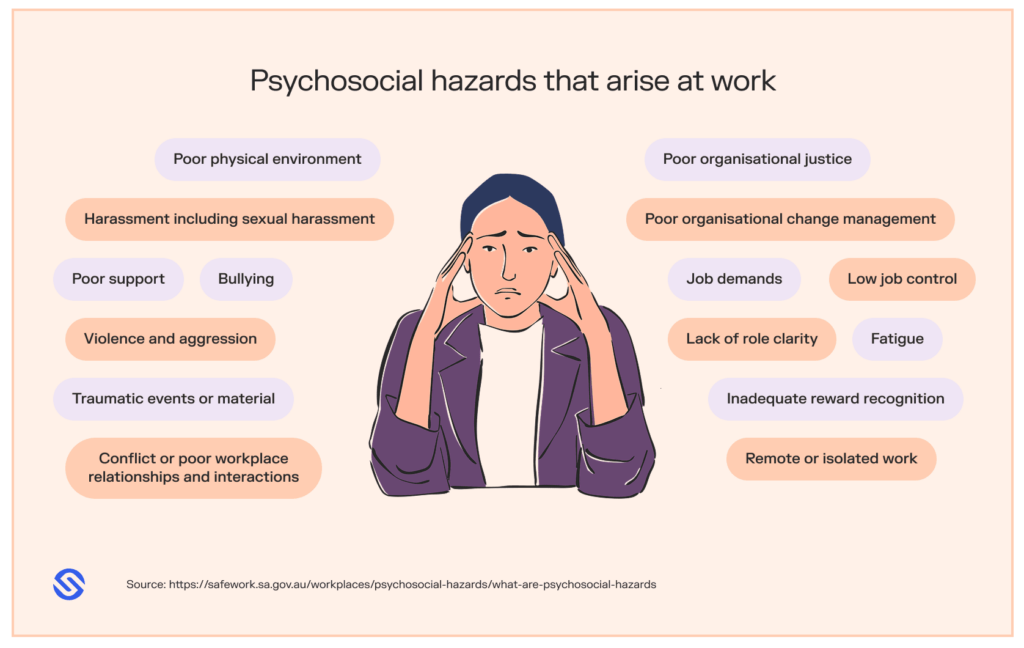
While every role comes with certain requirements and expectations, people generally need some level of autonomy in how they work. When that control is limited, employees may feel less engaged, less trusted, or less able to influence decisions that affect them.
Low job control can look different depending on the role, industry, and workplace. Some examples include:
| Role type | What low job control can look like |
| Knowledge workers | Little input into deadlines, priorities, or project decisions, despite being responsible for delivering the work. |
| Frontline and operational roles | Limited discretion to adapt processes, respond to situations as they arise, or make decisions within their role. |
| Hybrid teams | Unclear decision-making authority, creating uncertainty about what employees can decide independently and what requires approval. |
What contributes to low job control?
Low job control often develops through workplace practices and systems that are introduced with good intentions, but may gradually reduce an employee’s ability to influence their day-to-day life.
Some common contributing factors include:
| Contributing factor | How can it contribute to low job control |
| Decisions made from the top down | Employees have few opportunities to contribute ideas, provide input, or influence decisions that affect their work. |
| Unclear escalation pathways | Employees are unsure when they can make decisions themselves and when they need approval, leading to hesitation and reduced confidence. |
| Over-reliance on processes and scripts | Standardised processes leave little room for professional judgement, problem-solving, or flexibility. |
| Technology-driven workflows | Automated systems, ticketing platforms, and digital tools can dictate how work is prioritised, allocated, and completed. |
| Uneven adoption of AI tools | There are hidden psychosocial risks of AI — some employees use AI confidently, while others avoid it. This can create uneven workloads, frustration, and a growing sense of losing control as roles evolve. |
People feel like the pace is no longer theirs to set. The machine can go faster, so the expectation is that they should too. But their ability to influence how work gets done doesn't increase at the same rate.

Work Futurist, Be Luminous
What are the risks of low job control?
Like many psychosocial hazards, the impacts of low job control are not always immediately visible. This can make them easy to overlook until they begin affecting people more broadly across a workplace. Some of the most common risks include:
- Chronic stress and burnout: When employees have little ability to influence their workload, pace of work, or priorities, it can become harder to manage ongoing demands. Over time, this can contribute to stress, fatigue, and burnout.
- Disengagement and reduced motivation: Employee autonomy helps people feel connected to their work. When that autonomy is limited, employees may feel less invested in outcomes and less motivated to contribute beyond what’s expected of them.
- Increased errors and reduced quality: Employees are often best placed to identify issues, adapt to changing circumstances, and make informed decisions in the moment. When there is little room for judgment or flexibility, mistakes can become harder to prevent, and quality may suffer.
- Higher turnover and attrition: People are more likely to stay in roles where they feel trusted, valued, and able to grow. When employees have little influence over their work, organisations may find it harder to retain experienced and capable people.
- Compounding other psychosocial hazards: Low job control can make other psychosocial hazards worse, particularly imbalanced job demands. Employees may be carrying a high workload while having little control over how that work is managed.
How do you identify low job control in your workplace?
As employees do not often describe low job control in those terms, and its signs can sometimes be mistaken for performance, engagement, or capability issues, it can be difficult to identify.
Every team is different, and not every sign will be relevant in every workplace. Rather than a checklist, think of the following questions as a guide to help understand how people experience their work.
When checking in with your team, consider:
- Are employees frequently seeking approval for routine decisions? This may suggest they’re unclear about what decisions they can make independently.
- Are people completing tasks, but rarely contributing ideas or raising concerns? Quiet compliance can be a sign that employees don’t feel they have much influence over how work gets done.
- Do you hear comments like “I’m just following the process” or “that’s how the system works”? These can indicate that employees feel constrained by processes or systems.
- Are employees waiting for direction rather than taking initiative? A lack of ownership or confidence in decision-making can sometimes be linked to low job control.
- Are employees frustrated by work processes or decision-making? Concerns about how work is organised can provide valuable insight into where control may be limited.
- Are employees hesitant to use new tools, particularly AI? Repeatedly checking their work, avoiding AI tools altogether, or expressing uncertainty about how to use them may indicate that its introduction has caused confusion rather than capability.
- Have you asked employees how they experience their work? People may describe feeling frustrated, stressed, fatigued or overlooked rather than explicitly identifying low job control.
- What patterns are emerging across the team? Information such as overtime, leave, incident reports or repeated concerns about workload and decision-making can help build a clearer picture of where risks may exist.
You don’t need to see every one of these signs for low job control to be present, and many organisations are likely already doing many of these things. What matters most is creating opportunities for employees to share where they may need more support.
How can leaders reduce low job control?
As leaders, you know that structure and oversight are important parts of running an organisation. The goal isn’t to remove them, but to look for opportunities to give employees greater input into how work gets done.
In many cases, small changes to how decisions are made, communicated, and implemented can help employees feel more trusted and involved in their work.
| Strategy | How it can help |
| Co-design work processes with employees | Involve employees in conversations about how tasks are structured, prioritised, and delivered. People are more likely to feel ownership over processes they’ve helped shape. |
| Clarify decision authority | Clearly define what employees can decide independently and what should be escalated. This can help reduce poor role clarity, minimise uncertainty, and help people act with greater confidence. |
| Create flexibility within the structure | Even in highly structured environments, employees may benefit from some choice in how work is completed. Where possible, provide flexibility around pace, method, or the order of tasks. |
| Provide clear guidance on AI use | Explain where AI fits within existing processes, where human judgment is still required, and who remains accountable for decisions. AI should support decision-making, not replace it. And clear AI guidance can help reduce uncertainty as roles evolve. |
How do you build a culture of autonomy at work?
Building autonomy into workplace culture starts foremost with creating regular opportunities for employees to discuss their workload and responsibilities.
As teams grow, technologies shift, and ways of working evolve, it can be difficult to spot when roles, processes, or decision-making structures need revisiting.
Regular check-ins and conversations can help organisations identify where employees may need greater clarity, support, or opportunities for input, particularly during periods of organisational change such as the introduction of AI, remote working, or global teams.
Ultimately, clear communication is so important. Sonder’s guide: How to navigate psychological safety in an age of AI, establishes the value of helping employees understand what work is best done by AI and what remains uniquely human. That clarity can help employees feel more confident in their role and maintain a sense of control.

How Sonder supports employees experiencing low job control
Low job control can be challenging to address, particularly when it develops gradually over time or alongside other psychosocial hazards. Sonder can help.
- For employees: Sonder provides 24/7 access to confidential support, giving them somewhere to turn when they need help.
- For leaders: Sonder lowers a business’s risk by providing a clear pathway to support for their teams, without leaders becoming accidental counsellors themselves. Secondly, aggregated, privacy-protected data and insights from Sonder’s Customer Portal help leaders identify patterns across teams, so they can recognise potential risks and respond early.
To learn more about how Sonder can support your organisation, arrange a call or request a demo.
FAQs
Low job control refers to how much say employees have over how, when, or at what pace they carry out their work. Safe Work Australia recognises it as a psychosocial hazard, and it can affect employees regardless of seniority or experience.
No. Micromanagement is a management style or behaviour. Low job control describes the experience employees can have when they have little influence over how their work is carried out. Micromanagement may contribute to low job control, but the two are not the same thing.
In Australia, Safe Work Australia recognises low job control as a psychosocial hazard under work health and safety (WHS) laws, alongside factors such as high job demands and poor support. Requirements can vary by jurisdiction, so check current obligations or speak with a legal adviser for guidance specific to your organisation.
Yes. An employee can be capable and experienced and still feel they have little say in how their work gets done, particularly where decisions about priorities, schedules, or ways of working are made around them rather than with them.
Not necessarily. Structure and oversight remain important parts of running an organisation. Increasing autonomy is generally about finding opportunities to give employees more input into how work gets done, rather than removing structure altogether.
Uneven adoption of AI tools across a team can create new low job control risks. Some employees may use AI confidently while others avoid it, which can create uneven workloads and a sense that decisions about how work gets done are shifting without their input. Providing clear, explicit guidance on AI use can help address this.