
At a glance:
- Knowing the basics isn’t doing them: Most managers have done the training and know the principles of good leadership, but far fewer apply them day to day.
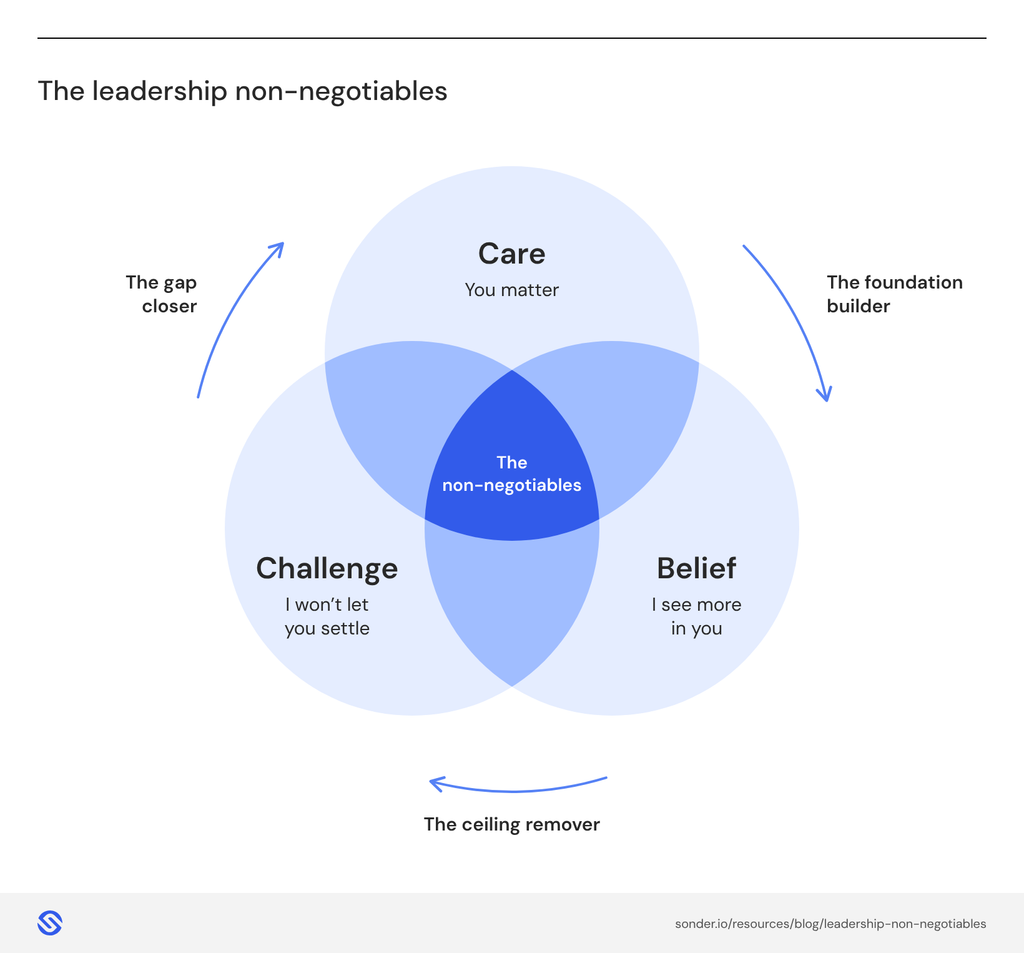
- Three non-negotiables: Care (“you matter”), belief (“I see more in you”) and challenge (“I won’t let you settle”) shape how people feel, show up and perform.
- Earn the right to challenge: People take hard feedback better from a manager who cares about them and believes in them. Tell your team what you see in them, then give them room to prove it.
- Managers need support, too: Managers shouldn’t be expected to act as a psychologist for their team. Expert support helps them focus on the basics, with care that starts before crisis.
Most managers have sat through workshops, read the books and understood the frameworks that guide good leadership. So, why do so many teams feel under-supported, under-challenged or unseen?
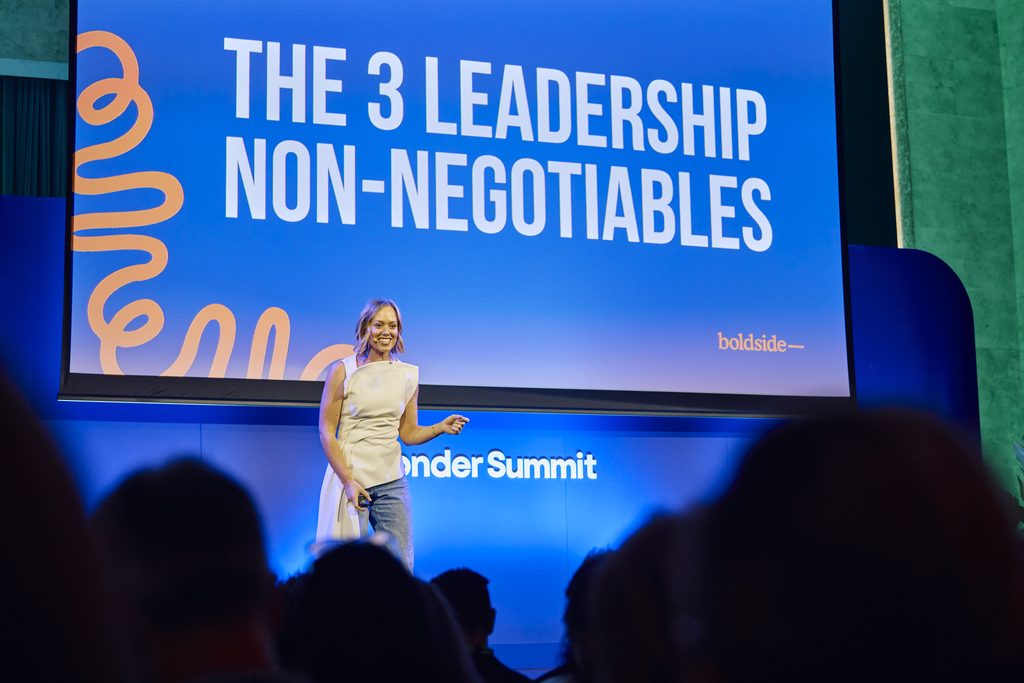
At Sonder Summit 2026, HR leader Shelley Johnson offered a compelling answer: knowing the basics isn’t the same as doing them day to day. In one of the top-rated sessions of the day, Shelley shared three leadership non-negotiables that sound simple on the surface, but actually deliver some of the best results for individuals, teams and organisations.
Leadership skills matter. In Sonder’s research with 2,000 employees, poor leadership support had the biggest impact on work performance of 16 workplace experiences, with 47% of those affected saying it had a large impact.
Watch the full recording here, or catch up on the highlights below.
Meet the expert: Shelley Johnson
Founder of Boldside, HR leader, author and speaker. Columnist for The Age and the Sydney Morning Herald. Host of the award-nominated podcast This Is Work. Shelley has spent over a decade coaching executives and leading HR teams across Australia.
What are the three leadership non-negotiables?
According to Shelley, care, belief and challenge are non-negotiable for leaders. While each behaviour may seem obvious, it shapes how people feel, show up and perform at work. Whether you’re leading a team for the first time or are a seasoned CEO, these non-negotiables are the building blocks for great leadership.
| Non-negotiable | What it says | What it looks like in practice |
| Care | “You matter” | Listening actively, recognising effort and modelling work-life balance |
| Belief | “I see more in you” | Naming potential, giving stretch assignments and backing people in front of others |
| Challenge | “I won’t let you settle” | Giving direct, specific feedback early and asking before telling |
What does care mean in leadership?
Care in leadership means showing people they matter as individuals, as a team and as part of an organisation. This leadership non-negotiable shows up in small, regular moments, rather than grand gestures.
Shelley sums up care in two words: “you matter”. Leading with care means you see the whole person you’re managing: their strengths, their weaknesses, the burdens they’re carrying and the skills they’re working on. Care sets the foundation for every non-negotiable that follows.
Great leaders don’t just care about what you do. They care about who you are.

Founder of Boldside
Care lays the foundation for psychologically safe work environments, and managers play a unique role in fostering it. Sonder’s Safety Gap Report 2025 found 60% of 2,001 Australian and New Zealand workers don’t feel genuinely valued at work, and 55% don’t feel genuinely included. By leading with care in all of your day-to-day interactions, your people will be more likely to feel seen, speak up and stick around.
In practice, leading with care looks like:
- Actively listening to your team: Give your full attention during 1:1 meetings, avoid interruptions and ask questions about what they’re navigating beyond their to-do list.
- Offering rewards and recognition: Build trust by showing teams you notice their effort through verbal praise, quick thank-you notes or public shout-outs in team-wide meetings.
- Championing work-life balance: Lead by example by switching off after hours, avoiding work during scheduled breaks and modelling clear boundaries that allow you and your teams to fully disconnect from work.
How do you show belief in your team?
Belief in leadership means seeing your team’s potential and opening doors to help people realise it. Shelley calls this leadership non-negotiable the “ceiling remover”. Managers play an important role in spotting what someone can do, instilling confidence and creating opportunities for them to grow and level up at work.
The best leaders are potential finders and ceiling removers.
Founder of Boldside
This idea draws on the Pygmalion effect, first observed in classrooms by researchers Robert Rosenthal and Lenore Jacobson in 1968. When someone holds high expectations of us, we often rise to meet them, and the same can apply at work. As a manager, your belief in your team can help build their own self-belief. The catch is that leaders need to share their belief out loud and back it up with a stretch opportunity.
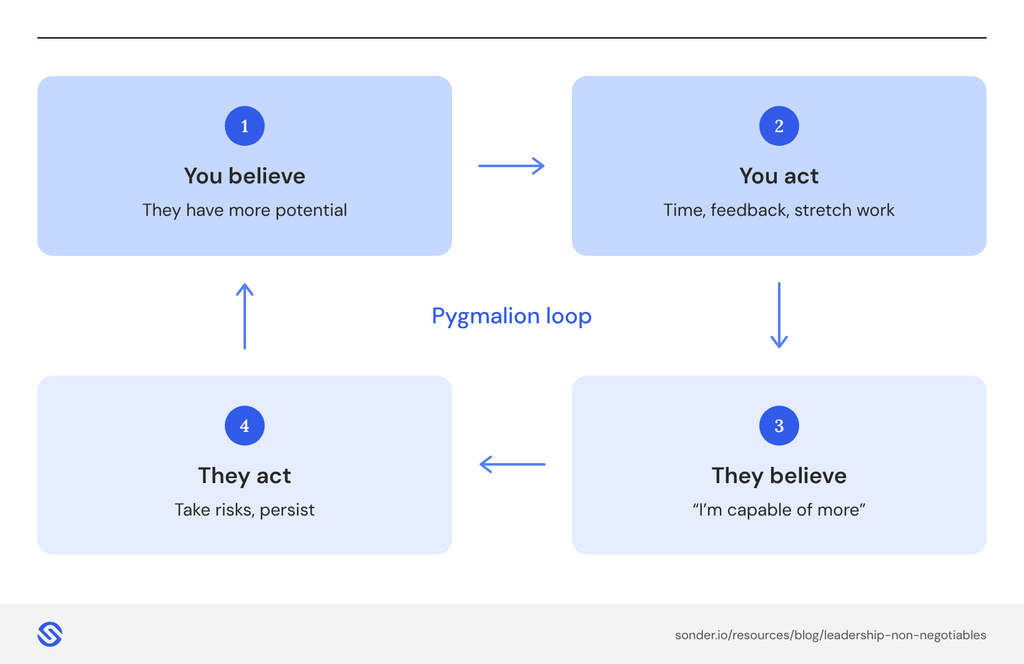
Here’s why belief matters: Sonder’s research shows leaders may overestimate how supported their teams feel: 92% of senior leaders feel valued at work, compared with 80% of middle managers and below. As a manager, showing belief in your team can build confidence, trust and a sense of capability that allows your team to push past the ceilings they’ve put on themselves.
In practice, leading with belief looks like:
- Naming the potential you see: Be specific about what you’ve noticed and where you think someone could go. “I reckon you’d be great at leading this” is more empowering and specific than a generic “good job”.
- Giving stretch assignments: Give people projects or tasks just beyond their comfort zone. Things like presenting to the team, leading a project or running a client meeting. Make it clear what support is there if they need it.
- Making it safe to stumble: Agree upfront that early wobbles are part of the learning process. If things don’t go to plan, debrief by asking what they’d do differently and use this as a learning experience. Just 24% of workers feel completely safe to make mistakes at work, according to Sonder’s Safety Gap Report 2025, so this reassurance matters.
- Backing people in front of others: Put their name forward for opportunities, credit their work in team meetings and speak up for them in rooms they’re not in.
- Raising the bar as they grow: Check in on how the stretch goal is going, and step up the challenge when they’re ready. Belief isn’t a one-off. The loop keeps turning only if opportunities keep coming.
How can you challenge someone without them getting defensive?
Challenge is Shelley’s third leadership non-negotiable and means “I won’t let you settle”. She describes it as a gap closer that helps close the distance between where someone is and where they could be. The goal of challenging your people is to help them realise their full potential.
You can only challenge your team, share feedback and have hard conversations without sparking defensiveness if you’ve earned it. Care and belief are the foundational steps that help you earn trust from the people you manage. Without them, challenging your team can often come across as harsh or even feel like an attack.
Leading with care and belief gives you the permission to challenge your people.
Founder of Boldside
Avoiding hard conversations doesn’t help or protect anyone. As leaders, if you tolerate a low standard, it sets a benchmark for this individual and your entire team. When that happens, you get mediocrity at best and underperformance at worst. High performers may even feel there’s no reason to stick around.
Challenging your team means learning how to deliver effective feedback while keeping it constructive. If you’re looking for inspiration, our guide to psychologically safe performance reviews is a good place to start.
In practice, challenging your people looks like:
- Being direct and specific: Name the behaviour or outcome, not the person, and say it plainly rather than hinting.
- Having the conversation early: Raise gaps as they appear rather than saving them for a formal review in six months’ time. Small, timely conversations feel lower-stakes and give people time to close the gap.
- Asking before telling: Get curious about what’s getting in the way before you jump to solutions. Sometimes the gap is skills or clarity, not effort, and asking keeps people open to feedback.

How can organisations support managers to lead well?
Leadership non-negotiables like care, belief and challenge sound easy to achieve. But for many managers, being stretched thin means the basics can fall off the to-do list. And managers shouldn’t be expected to act as a psychologist for their team. Yet only 50% of managers agree their employer has given them enough support and training to support their team’s wellbeing.
Sonder offers care that starts before crisis, including expert backup for leaders so they can focus on the basics. Here’s how:
- Look after the person looking after the team: Sonder helps managers safeguard their own wellbeing, with 24/7 access to holistic care across mental health, medical and personal safety. When a team member needs more than a manager can offer, Sonder assesses their needs and connects them to the right care, so managers don’t have to carry it alone.
- Lead with confidence, not stress: Managers can book a session with a specialist clinician or coach for practical guidance on tricky situations, like conflict between team members or supporting someone through change management or a tough time. When managers feel backed, they have more headspace to spot potential, say it out loud and give people room to stretch.
- Prepare for the hard conversations: Before a difficult conversation or change, managers can get one-to-one coaching on how to approach it. That helps them be direct and kind, rather than avoiding it. Formal processes like performance management stay with HR.
To find out more about how Sonder can support your leaders, book a demo.
Want more practical insights like these? Watch all the Sonder Summit 2026 sessions on demand today.
FAQs
According to Shelley Johnson, founder of Boldside, they’re care, belief and challenge. Care shows people they matter, belief helps them see and reach their potential, and challenge stops them settling for less than they’re capable of.
People take hard feedback better from a manager who has shown they care and believe in them. Without that trust, challenge can feel harsh or even like an attack.
The Pygmalion effect is the idea that people often rise to meet the expectations others hold of them. It was first observed in classrooms by researchers Robert Rosenthal and Lenore Jacobson in 1968, and the same can apply at work when managers show belief in their team.
Little and often. Shelley Johnson advises raising issues as they come up, rather than saving them for a six-month review, and the same goes for positive feedback.
No. Managers play an important role in noticing when someone is struggling, but they shouldn’t be expected to act as a psychologist for their team. They need expert backup, yet only 50% of managers agree their employer has given them enough support and training to support their team’s wellbeing.